Monmouth Castle
The ruins of Monmouth Castle can be found close to the centre of the town of Monmouth, the county town of Monmouthshire in south-east Wales. What was once an important border castle, today only a few fragments remain. But, Monmouth Castle has a regal history; it was the birthplace of Henry of Monmouth, more famously known as the warrior king Henry V of England.
Quick
Facts.
- Location: Monmouth, Monmouthshire, Wales
- Established: c. 1066 - 1069
- Built in stone: 12th to 14th centuries
- Condition: Ruined
- Date visited: March 2025
- More info: Visit website
- Rating:
A Bit of History…
Strategically located and occupying relatively high ground at a vital crossing of the River Monnow and River Wye, Monmouth Castle was originally built sometime between 1066 and 1071 as an earth and timber ringwork castle by the Norman lord William FitzOsbern, Earl of Hereford.
William FitzOsbern was a cousin of William the Conqueror and one of his most trusted barons. He was also one of the major Norman castle builders. Other castles attributed to him include Chepstow Castle in South Wales, Wigmore Castle in Herefordshire, and Berkeley Castle in Gloucestershire. He also created or improved fortifications in the towns of Hereford and Shrewsbury.
Monmouth Castle was one of the most important castles in the Welsh Marches, the area between England and Wales governed by powerful barons who exercised an almost regal authority. Presided over by a Marcher Lord, it was similar in style and status to its near neighbours Grosmont Castle, Skenfrith Castle and White Castle.
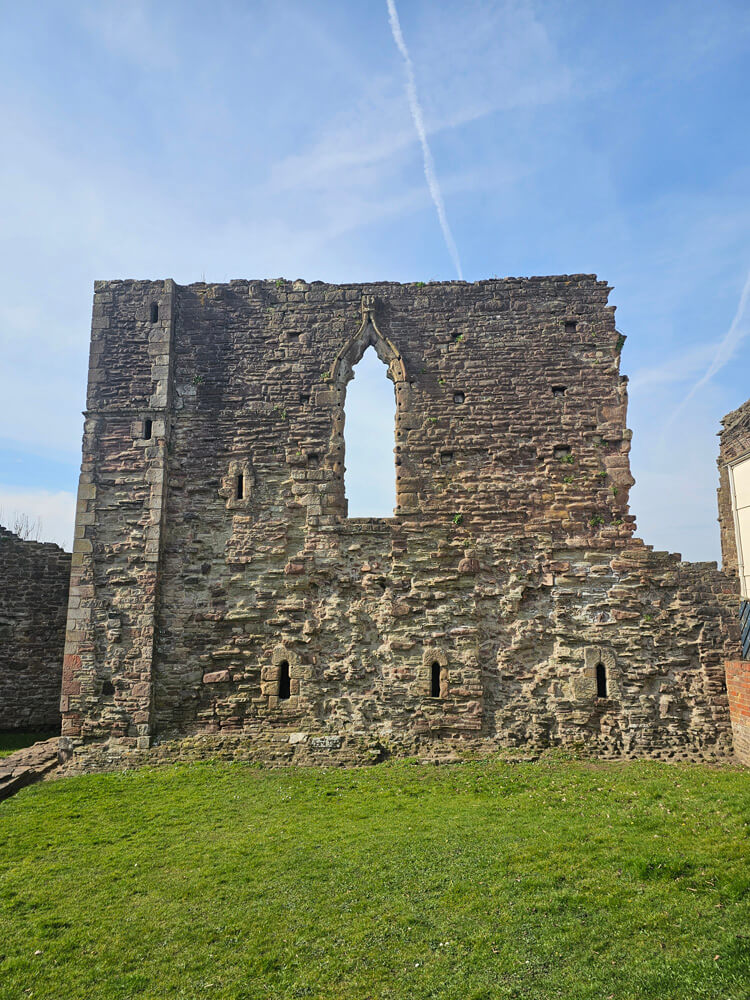
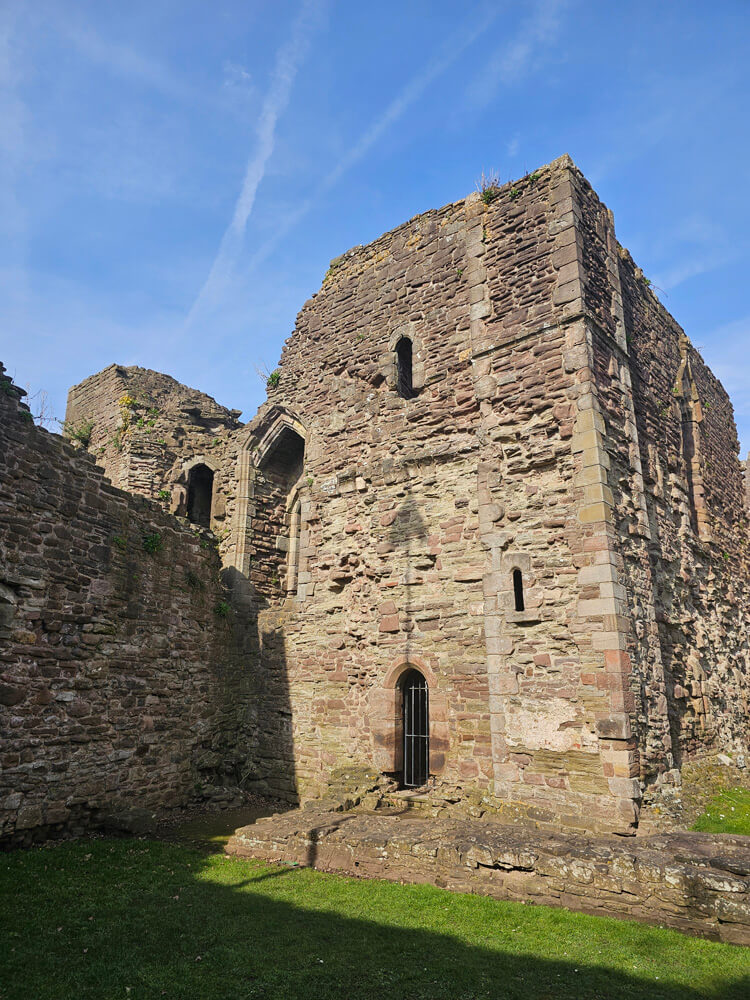
Sometime during the 12th century the castle was enlarged and upgraded with stone defences, certainly before 1150, which included the Great Tower, similar in style to that at Chepstow. Monmouth Castle eventually passed to Edmund Crouchback, King Henry III‘s second son, when he became earl of Lancaster in the middle of the 13th century. Edmund used the castle as his main residence in the area, strengthened its defences and added the Hall, the large rectangular building to the south of the Great Tower, which was a single-storey building used for holding court.
As the castle grew, so did the town that developed around it. The castle and town defences were extended with the building of town walls and a fortified bridge, known as Monnow Bridge, built at the end of the 13th century. King Edward II was briefly held prisoner at Monmouth Castle before he was transferred to Berkeley Castle in Gloucestershire where he died, most likely murdered.
Monmouth Castle was a favourite residence of Henry Bolingbroke and became a royal residence when he became King Henry IV of England in 1399. Sometime in 1386 or 1387 Henry’s first wife gave birth to a son at Monmouth Castle, a son that would later take the throne as King Henry V, and who would become a warrior king, famous for winning the Battle of Agincourt in France.
Over time the castle’s military importance dwindled and the outer bailey became increasingly used as a market place, later, and still today, called Agincourt Square in honour of Henry V and his victory at the Battle of Agincourt in 1415. During the 16th century, when Monmouth became the county town of the newly formed shire of Monmouth (the county of Monmouthshire), the county’s Courts of Assize began to be held in the castle’s Great Hall.
Monmouth Castle met its end when it was captured by Parliamentary troops during the 17th-century English Civil War. Oliver Cromwell ordered that the castle be ‘slighted’ so that it could no longer be used for military purposes, and in 1647 it was destroyed.
In 1673 a residence known as Great Castle House was built where the castle’s round tower once stood. It was built by Henry Somerset, Duke of Beaufort, which replaced Raglan as his family’s residence following the Civil War. Great Castle House then became used for the Assize Courts until they relocated to the new Shire Hall in 1725. Then in 1875 the house became the headquarters of the Monmouthshire Royal Engineers, where there is now a regimental museum tracing the history of the regiment from its inception in 1539.
Monmouth Castle Today
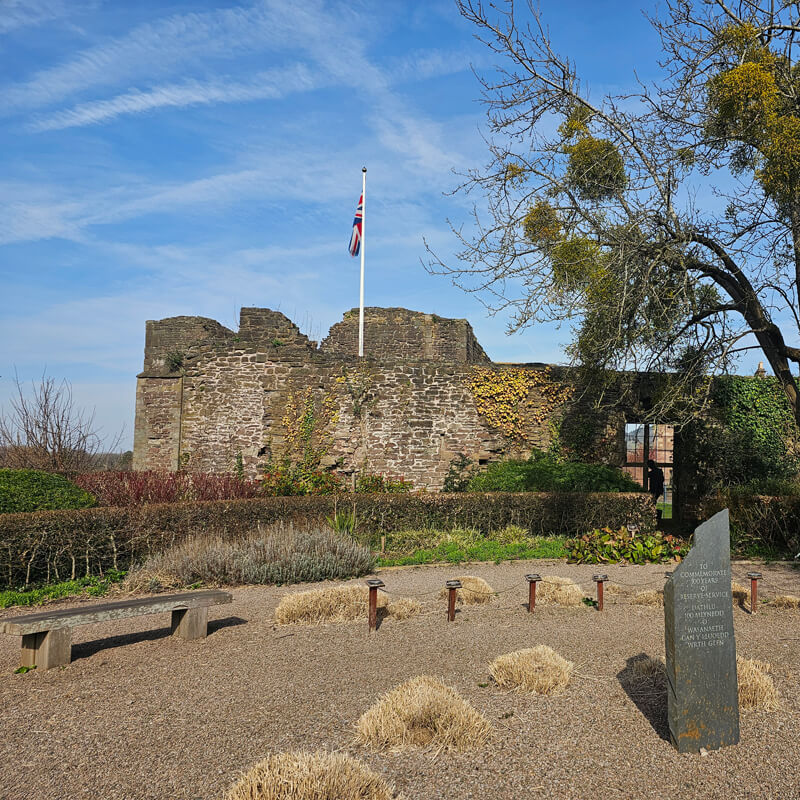
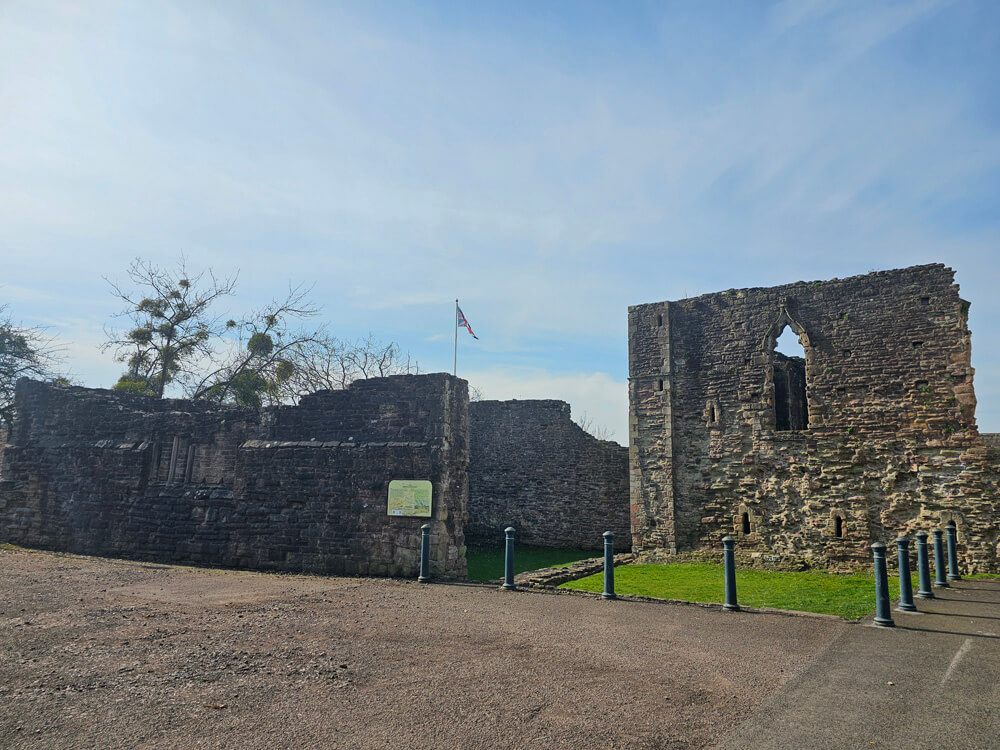
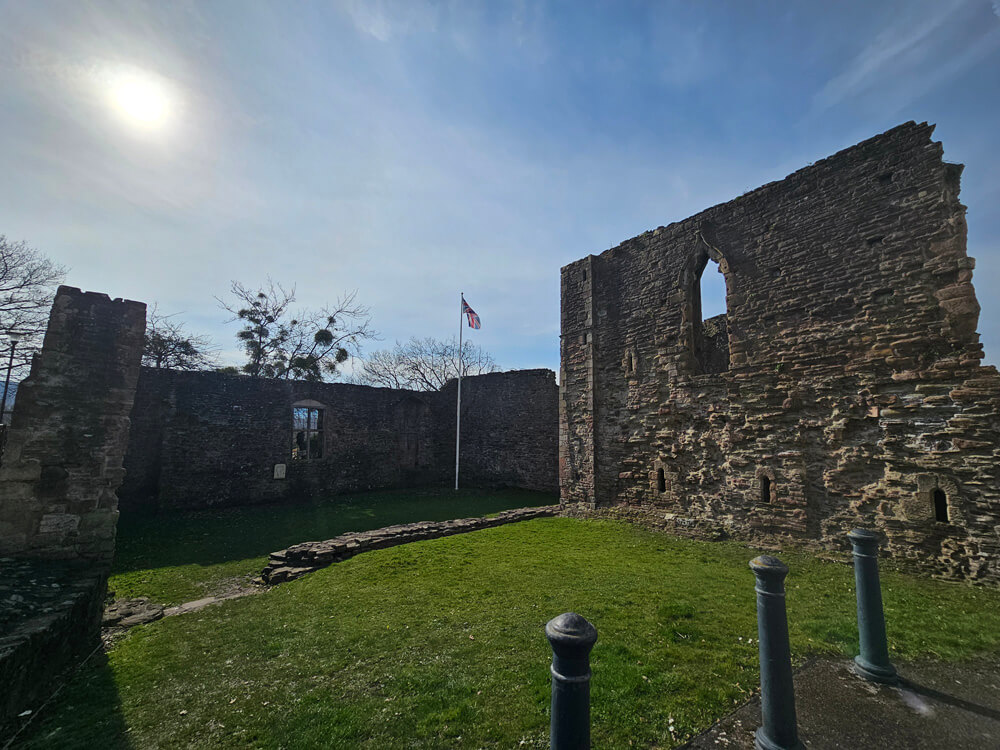
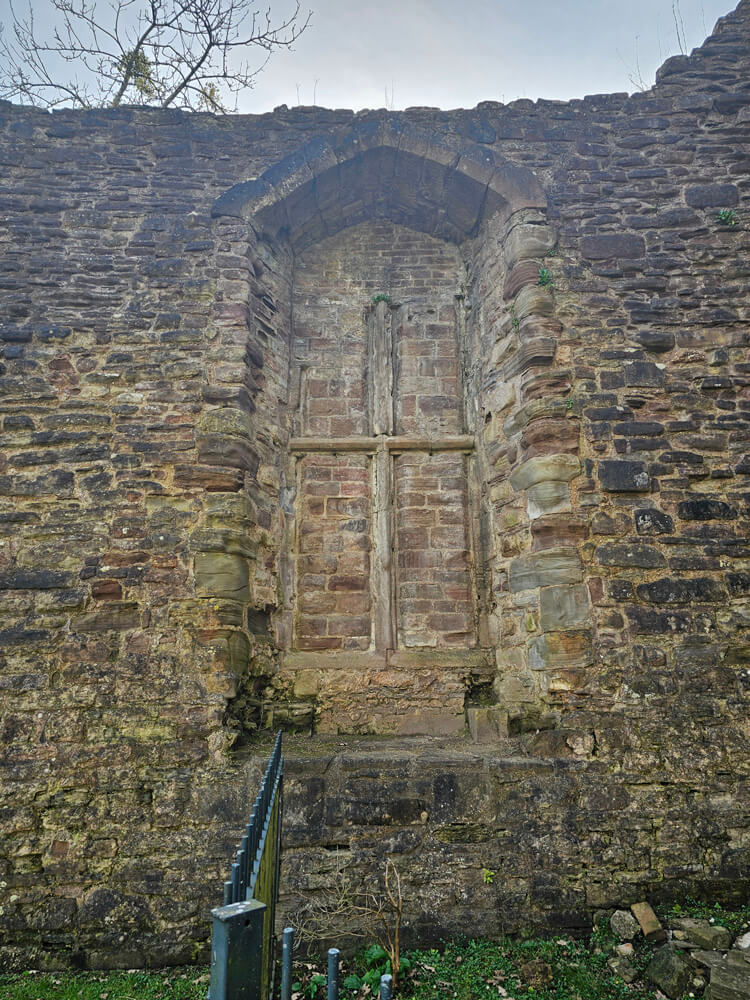
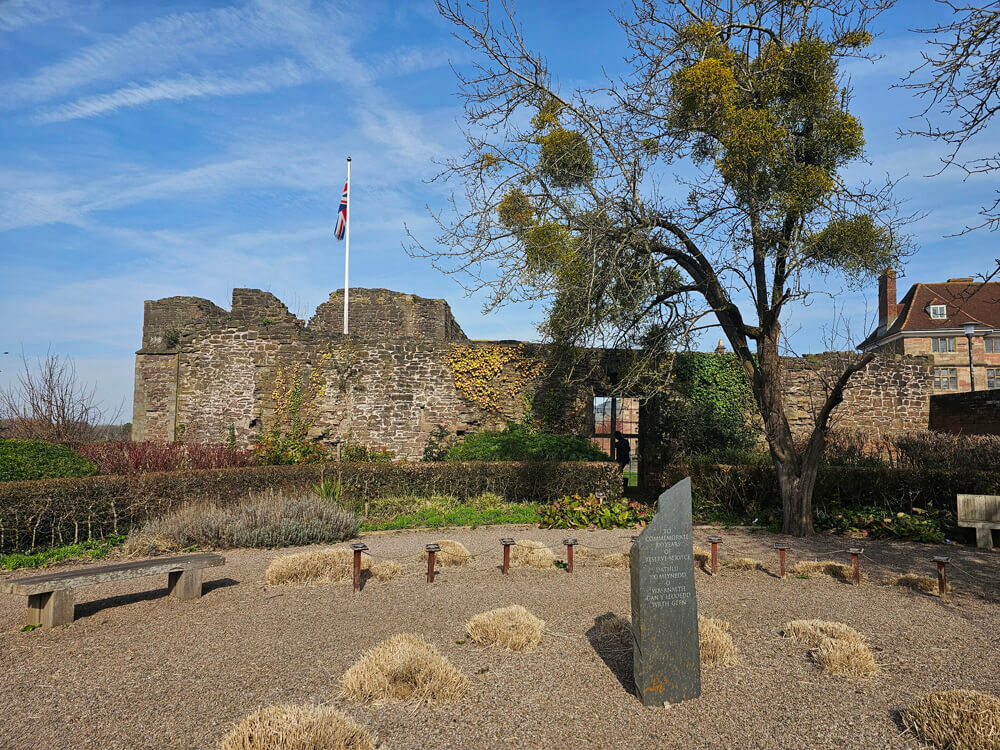
The ruins of Monmouth Castle can be found tucked away down a lane off Monmouth’s main shopping street. Only fragments of the castle, including the 12th-century Great Tower, the 13th-century Hall, and short sections of the castle walls survive, which stand on the edge of a steep slope down to the river Monnow, on the west side of what was the castle ward. The oldest surviving part of this once important border castle is the ruins of the Great Tower, which was likely built between 1120 and 1130. The castle is now a Grade I listed building and a scheduled monument in the care of Cadw.
The site provides a tranquil setting to relax among the ruined stone walls and a recreated medieval courtyard garden called the ‘King’s Garden’. The site is quite small and doesn’t require much time to explore, but you could combine your visit to the castle with a visit to the Great Castle House located across the street, which houses a museum about the regiment and records the early defences of Monmouth and its castle. There’s also the 13th-century Monnow Bridge just a short walk to the other end of the high street, which is the only remaining medieval fortified river bridge in Great Britain with its gate tower standing on the bridge.
Photo Gallery.
Did you enjoy this post?
I hope you found this post useful. I put a great deal of time and effort in to building, maintaining and populating the website. If you like, you could say a small thank you by buying me a coffee. You don't have to, but it would be nice :)
Buy me a coffee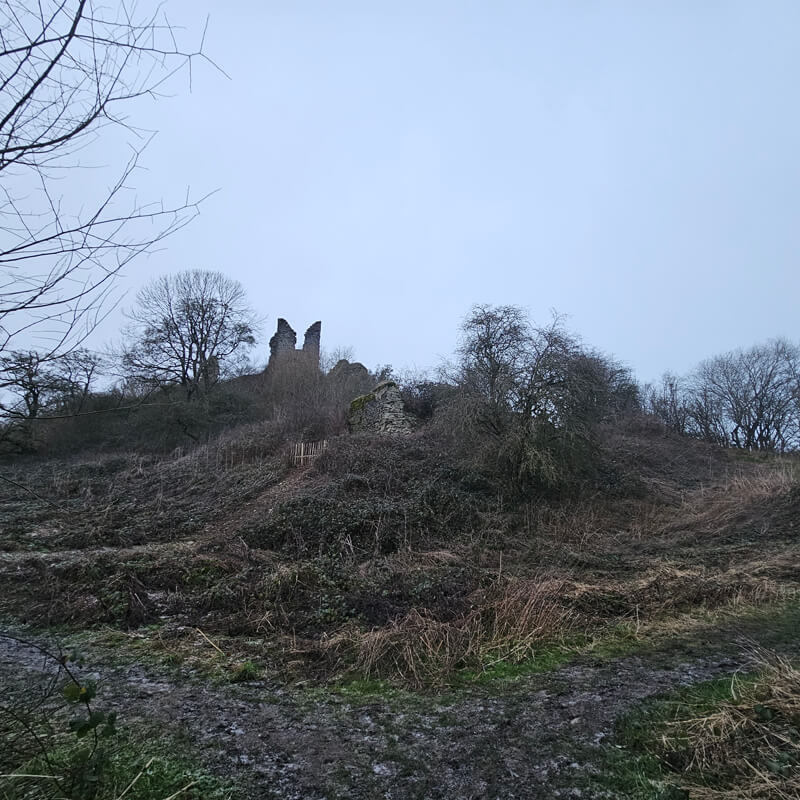
Stay up to Date
Follow me on my journey and get notified whenever a new post is published by following Kings & Castles on Facebook.
Follow MeExplore The Map
Discover the hundreds of castles, churches, monasteries, cathedrals and other historic locations that I've personally visited across England and Wales. Search by location, explore nearby sites and plan your next historical adventure.
Share: