Edward I’s Ring of Iron: The Castles of Wales
Edward I built a formidable network of castles to consolidate his conquest of Wales. From the mighty fortresses of Caernarfon, Conwy, Harlech and Beaumaris to the strategic strongholds of Flint, Rhuddlan and Denbigh, explore the history and purpose of Edward I’s Ring of Iron.
What Was Edward I’s Ring of Iron?
During the late 13th century, King Edward I of England embarked on an ambitious programme of castle building in Wales. Following his campaigns against the Welsh princes in 1277 and 1282–83, Edward sought not only to conquer Welsh territory but also to establish lasting control over it.
His answer was a network of formidable fortifications, particularly across north Wales, designed to secure strategic locations, protect English settlements and strengthen royal authority. This network became known as Edward I’s Ring of Iron.
The castles were positioned around important routes, river crossings and coastal approaches, helping English forces maintain control of the region. Many were built close to the sea or navigable rivers, allowing troops, building materials and supplies to arrive by ship.
These fortresses were more than military strongholds. They also served as centres of administration and supported the development of fortified towns, helping establish a new political order in the conquered territories.
Building Castles to Control Wales
Edward’s castle-building programme gathered pace after his first campaign against Llywelyn ap Gruffudd in 1277, but it expanded dramatically following the renewed rebellion of 1282.
The death of Llywelyn in December 1282 and the defeat of his brother Dafydd ap Gruffudd in 1283 marked decisive moments in the conquest. Edward subsequently strengthened his hold over Wales through new systems of government and an extensive programme of fortification.
Among the earliest strongholds built during this period were Flint and Rhuddlan. Both occupied strategically important positions in north-east Wales, helping secure English advances and control access to the surrounding countryside.
Further west, the great castles of Conwy, Caernarfon and Harlech began to take shape in 1283. Beaumaris followed in 1295, representing the culmination of Edward’s ambitions for an imposing and highly sophisticated fortress on the island of Anglesey.
The wider network also included castles such as Denbigh, built by powerful lords operating within Edward’s new political order. Although these fortifications differed in their origins and ownership, they contributed to the broader system of English control.
Masterpieces of Medieval Military Architecture
Edward’s castles incorporated some of the most advanced defensive designs of the period. Massive curtain walls, imposing gatehouses, projecting towers and carefully planned entrances made them formidable obstacles for potential attackers.
Several of the greatest fortresses employed concentric defences, with multiple lines of walls creating successive barriers. This design is particularly evident at Beaumaris, whose symmetrical layout and extensive outer defences demonstrate the sophistication of late 13th-century military architecture.
Much of this ambitious work was overseen by James of Saint George, the master architect and military engineer who played a leading role in the construction of Edward’s Welsh castles. His expertise helped create fortresses that combined defensive strength with carefully planned internal spaces and impressive royal architecture.
The castles also had a powerful symbolic purpose. Their imposing stone walls and towers dominated the surrounding landscape, projecting the authority of the English Crown into territories that had resisted conquest.
At Caernarfon, the architecture was particularly grand, reflecting Edward’s ambitions to establish a royal centre in Wales. Conwy combined its castle with substantial town walls, while Harlech’s elevated position offered commanding views across the surrounding landscape. Beaumaris, meanwhile, was designed with remarkable symmetry, although financial pressures meant it was never completed as originally intended.
The Legacy of the Ring of Iron
Edward I’s castles helped consolidate English rule, but their history also reflects the determination of the Welsh people to defend their independence. The fortresses were built in response to resistance, and their scale demonstrates the challenges Edward faced in securing his conquest.
The castles did not end Welsh opposition. During the rebellion led by Owain Glyndŵr in the early 15th century, several strongholds again became important military objectives, and Harlech served as Glyndŵr’s headquarters for a period.
Today, Edward’s castles remain among the most recognisable historic landmarks in Wales. The full historical chain of castles encompasses ten primary sites, but the “Big Four” core fortresses of Caernarfon, Conwy, Harlech and Beaumaris are the most noteworthy. These four mighty castles form part of the UNESCO World Heritage Site known as the Castles and Town Walls of King Edward in Gwynedd, recognised for their exceptional contribution to medieval military architecture.
Together with other fortifications across Wales, they provide a remarkable insight into the conquest, the resistance it encountered and the lasting impact of Edward I’s ambitions.
Having visited seven of the ten castles, including the “Big Four”, I’ve seen how each has its own character and setting, from imposing coastal fortresses to strongholds guarding important routes inland. Explore the castles below to discover more about their individual histories and what remains to be seen today.
Explore Edward I’s Castles
Caernarfon Castle
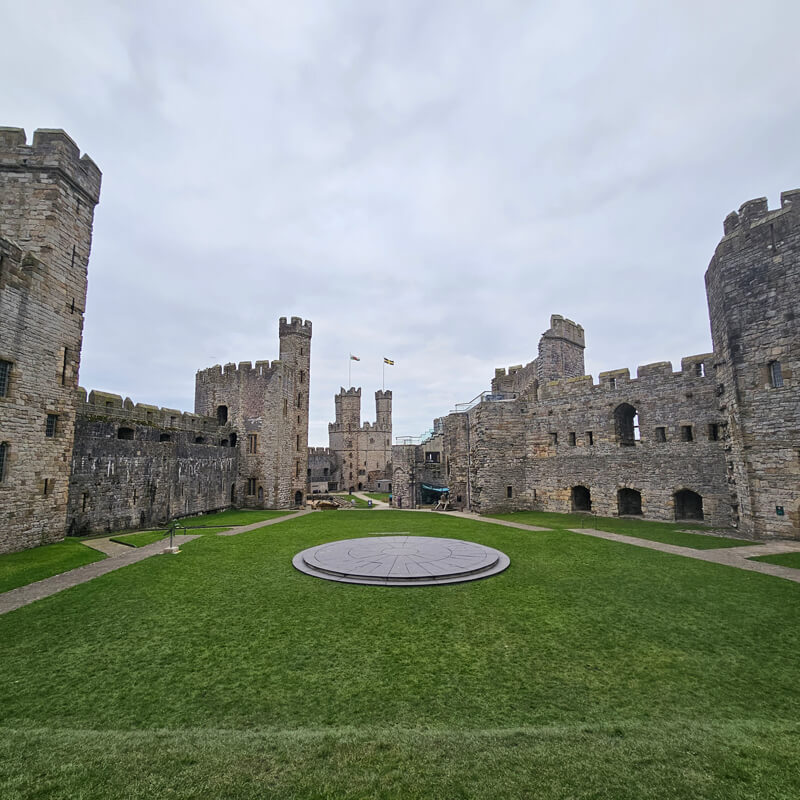
Construction began in 1283, and Caernarfon became one of Edward’s most imposing royal strongholds. Its distinctive polygonal towers and banded masonry give it a striking appearance, while its royal associations made it an important symbol of English authority in Wales.
Conwy Castle
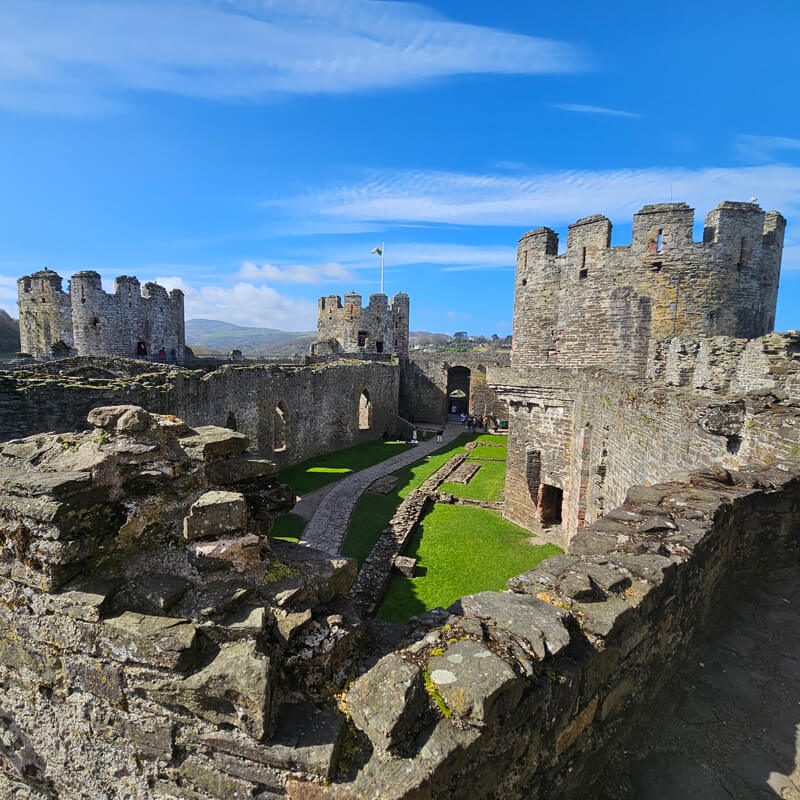
Built from 1283, Conwy Castle formed part of a fortified town enclosed by substantial stone walls. Overlooking the River Conwy, it combined a powerful defensive position with an impressive royal residence and remains one of the finest surviving examples of Edwardian castle building.
Harlech Castle
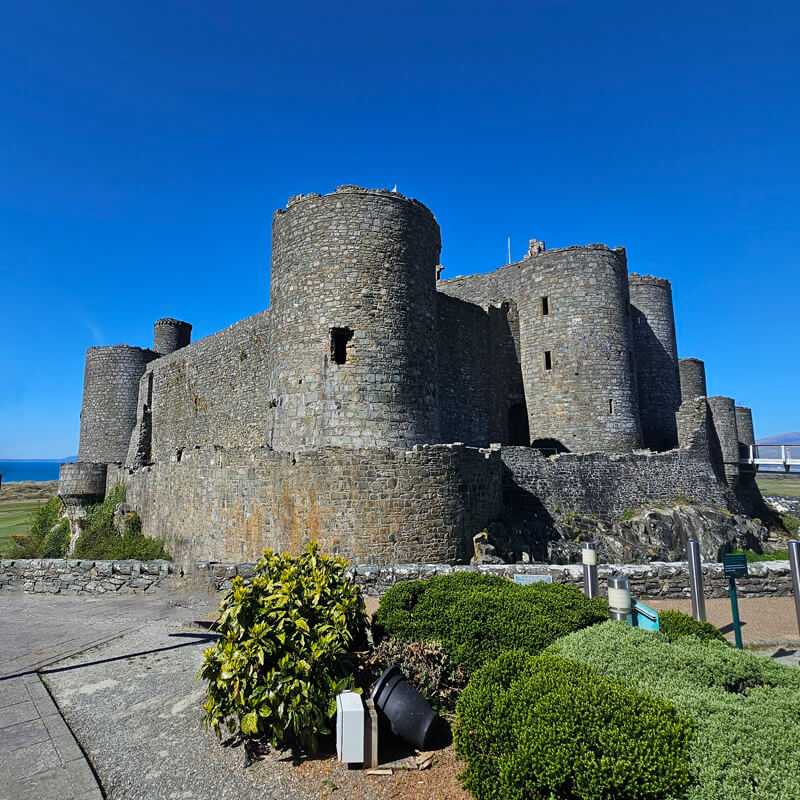
Perched on a rocky outcrop overlooking the surrounding landscape, Harlech Castle was begun in 1283. Its formidable defences and carefully positioned gatehouse made it a powerful stronghold, while its elevated setting remains one of its most memorable features.
Beaumaris Castle
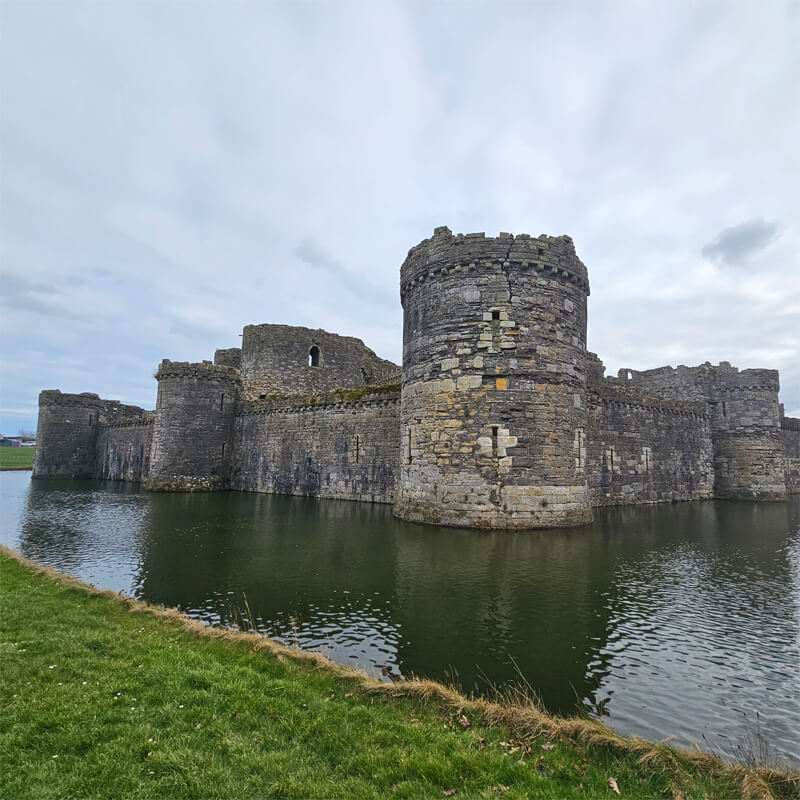
Begun in 1295, Beaumaris was the last of Edward I’s great royal castles in north Wales. Its remarkably symmetrical design, concentric walls and water-filled moat made it one of the most ambitious fortifications of its age, although it was never fully completed.
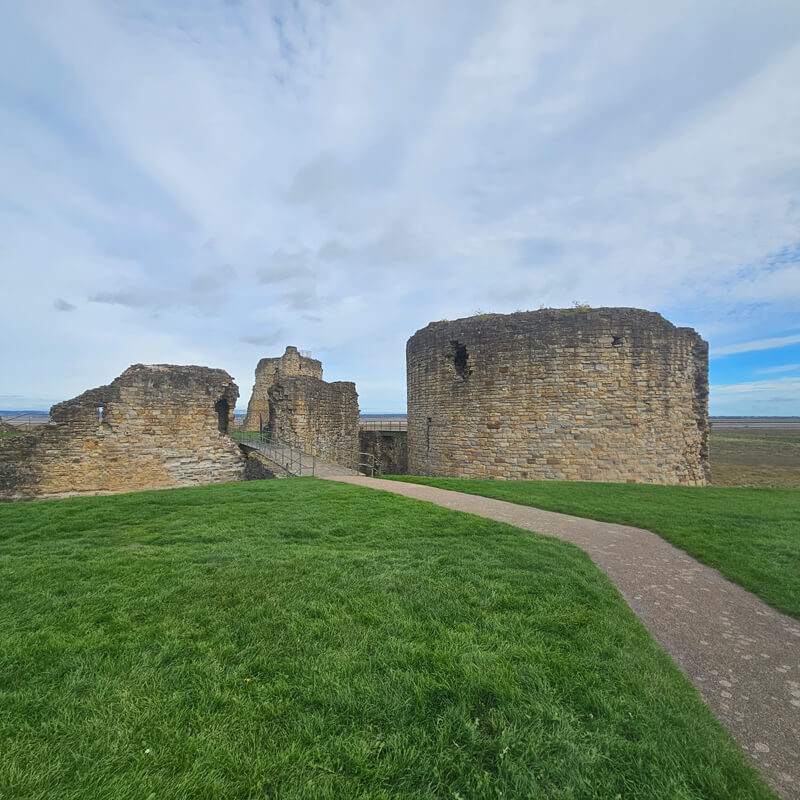
Flint Castle
Flint was among the first castles Edward ordered to be built in Wales, with construction beginning in 1277. Its position beside the Dee estuary made it strategically important during the first campaign, and its unusual detached round tower remains a distinctive feature.
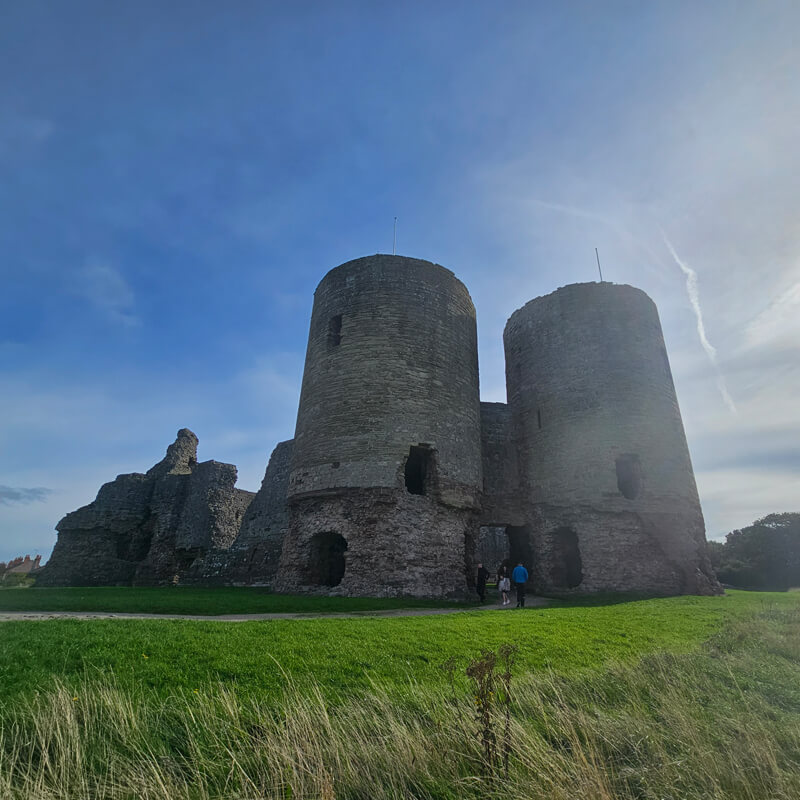
Rhuddlan Castle
Built from 1277, Rhuddlan Castle helped secure Edward’s control of north-east Wales. Positioned beside the River Clwyd, it was connected to a carefully planned settlement and benefited from access to river transport, making it an important military and administrative stronghold.
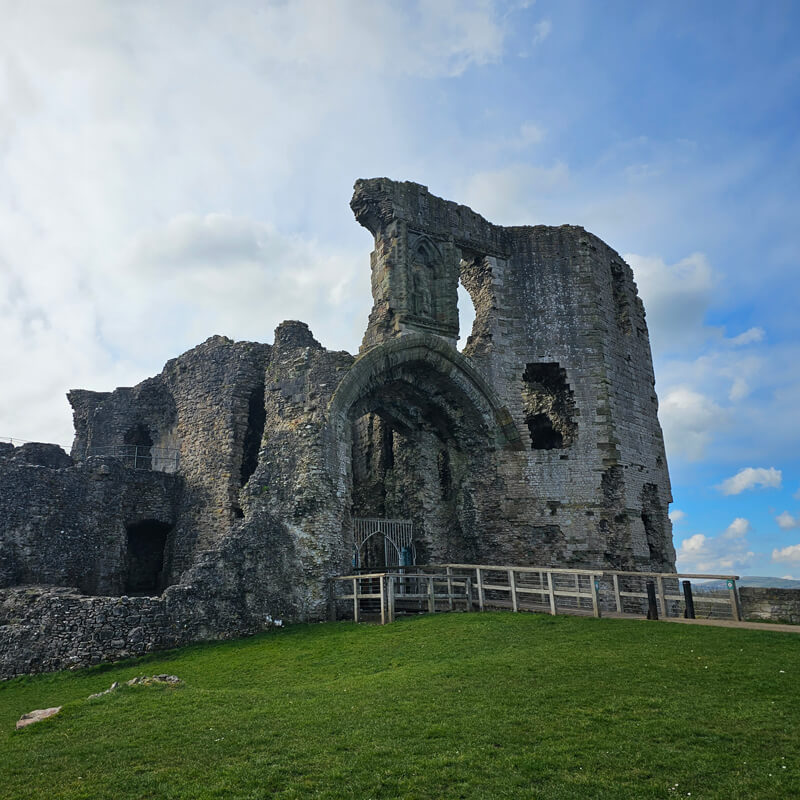
Denbigh Castle
Denbigh Castle was developed under the authority of Edward I by Henry de Lacy, Earl of Lincoln. Its substantial walls, impressive gatehouse and commanding position overlooking the surrounding town made it an important stronghold within the wider network of fortifications established after the conquest.
The Other Castles in Edward I’s Ring of Iron Network
Beyond the seven castles explored above, three further fortresses form part of the wider story of Edward I’s efforts to establish English control over Wales.
Hawarden Castle
Construction began in 1277 on a spur overlooking the River Dee in Flintshire. The castle became a significant location in the conflict between England and Wales: in 1282, the Welsh prince Dafydd ap Gruffudd attacked Hawarden Castle, helping to trigger Edward I’s final campaign of conquest. Today, the ruins include the remains of a round keep and sections of the castle walls.
Builth Castle
Work began on Builth Castle in 1277, as Edward I expanded his network of strongholds across Wales. Situated in mid-Wales, it was intended to strengthen English control over an important inland area. However, the project was never completed, and little survives above ground today beyond earthworks and rubble.
Aberystwyth Castle
Construction of Aberystwyth Castle also began in 1277, establishing a strategic English stronghold on the west coast of Wales. Built to reinforce Edward I’s authority in the region, it was developed further in the following decades. Although now largely ruined, parts of its medieval defences remain, reflecting its former importance as a military and administrative centre.
Did you enjoy this post?
I hope you found this post useful. I put a great deal of time and effort in to building, maintaining and populating the website. If you like, you could say a small thank you by buying me a coffee. You don't have to, but it would be nice :)
Buy me a coffee
Stay up to Date
Follow me on my journey and get notified whenever a new post is published by following Kings & Castles on Facebook.
Follow MeExplore The Map
Discover the hundreds of castles, churches, monasteries, cathedrals and other historic locations that I've personally visited across England and Wales. Search by location, explore nearby sites and plan your next historical adventure.
Share: