The History of the English Language
English is a West Germanic language in the Indo-European language family, whose speakers originated in early medieval England. Today, it is the most widely spoken language in the world.
The Prehistory of English
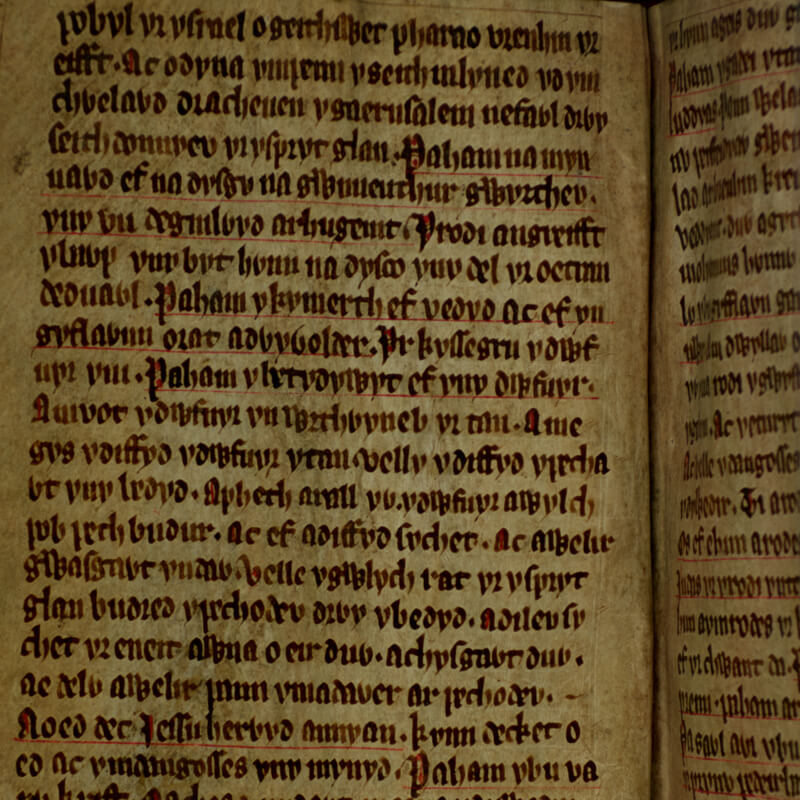
The ultimate origins of the English language are from Indo-European, a family of languages consisting of most of the languages of Europe as well as those of Iran, the Indian subcontinent and other parts of Asia. Little is known about the ancient Indo-European language, but we know it may have been spoken as long ago as 3,000 BC.
Celtic languages were once spoken all across the British Isles, but they were reduced to significantly small numbers as a result of invasions by the Romans in 43 AD and the Anglo-Saxons in the early 5th century. The conquest of the Celtic speaking population in Britain by speakers of West Germanic dialects eventually determined many of the essential characteristics of the English language. The Celtic influence on English survives for the most part only in place names such as Carlisle, Dover, Avon, and York.
There are six living Celtic languages toady: Welsh, Irish, Scottish Gaelic, Breton, Cornish, and Manx. These languages are divided into two branches: Goidelic (Irish, Scottish Gaelic and Manx) and Brythonic (Welsh, Breton and Cornish). While Cornish and Manx had previously become extinct, both have seen revival efforts in recent years. These languages are important to the cultural heritage of their respective regions.
The Anglo-Saxon Migration
The namesake of the English language; “English”, comes from the Angles, one of the ancient Germanic groups that migrated to the British Isles after the Romans left in the 5th century.
When Rome was being attacked by Germanic barbarian tribes in the 400s, the majority of Romans that occupied the British Isles had to leave and return to Rome to help save their empire. When the Romans left they created a power vacuum, and a struggle between the native Britons ensued. They turned against each other, plundering to avoid starvation, and those who could, fled overseas.
The native Britons didn’t know how to support themselves, and trade and the economy deteriorated. Another blow came from invading Picts and Scots from across the northern border. Vulnerable and alone, they asked Rome for help but no help came and they were left to defend and support themselves. The Britons then turned to groups of West Germanic tribes from across the English Channel for help, which they did.
Three groups of West Germanic tribes; the Angles, Saxons and Jutes, travelled across the English Channel to help the Britons, offering them protection in exchange for wealth and land. They were successful in defeating the enemies of the native Britons, but they liked the land in Britain so much that they decided to stay. And when the Britons could no longer afford to pay them, the arrangement broke down and backfired. They plundered the country and there was nothing the Britons could do to stop them. They sent word back to their tribes on the Continent about this new fertile and prosperous land, and more and more of them travelled over to settle.
Over several years, hoards of Angles, Saxons and Jutes travelled across the English Channel in longboats from present-day northwest Germany, southern Denmark and the Netherlands. They turned on the native people that invited them and began to raid their villages, killing their people and leaders. The Angles, Saxons and Jutes divided the lands between them and settled there for good. Some Britons left the country to escape from the invaders, but the native Britons that remained either became slaves or were driven north and west into lands we now refer to as Scotland, Ireland, Wales and Cornwall. This left the large majority of the land to be settled by their new overlords, and they especially dominated the south of the country.
This is why the people of England came to speak a totally different language to those of Wales, Ireland and Scotland. The native Britons spoke various dialects of the Celtic language, and possibly British Latin as a result of the Roman occupation. They can trace their languages back to the native Britons that were pushed into certain parts of the British Isles, remaining there with their Celtic languages. Whereas English developed from the West Germanic language that was brought to Britain in the mid-5th to 7th centuries by the Anglo-Saxon migrants, and would evolve through the centuries with the invasions and settlements of more foreign invaders.
Stages of Evolution
The evolution of the English language can be broken down in to five main stages or periods:
- Old English (500 to 1100)
- Early Middle English (1100 to 1300)
- Late Middle English (1300 to 1500)
- Early Modern English (1500 to 1800)
- Late Modern English (1800 to present)
500 to 1100: The Old English (or Anglo-Saxon) Period
It is believed that around 85% of Old English is no longer in use, however, surviving elements form the basis of the Modern English language today. Old English can be further subdivided into the following:
- Prehistoric or Primitive (5th to 7th century) – not much is known about this period of Old English, other than limited examples of Anglo-Saxon runes.
- Early Old English (7th to 10th century) – this period contains some of the earliest documented evidence of the English language, including literature from notable authors and poets like Cynewulf and Aldhelm who were leading figures in the world of Anglo-Saxon literature.
- Late Old English (10th to 11th century) – this period can be considered as the final phase of the Old English language, in which its end was brought about by the Norman invasion of England in 1066. The consequences of this were the evolution of the English language towards Early Middle English.
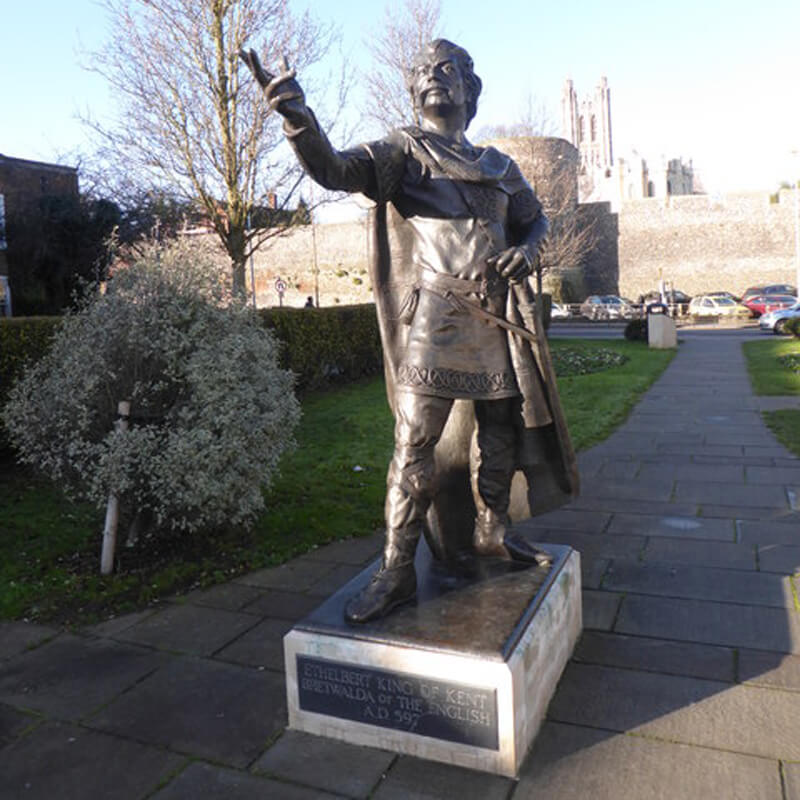
The 6th and 7th centuries saw the rise of the Saxon kingdoms of Wessex, Essex and Sussex, and the Angle kingdoms of Mercia, East Anglia and Northumbria. At this time, Saint Augustine and Irish missionaries started to convert Anglo-Saxons to Christianity, introducing new religious words borrowed from Latin and Greek. They began referring to the country as ‘Anglia’ and later as ‘Engla-land’, literally meaning “the land of the Angles” where they spoke ‘Englisc’ or ‘Ænglisc’, and this is where the words ‘England’ and ‘English’ originated from.
During this period the Vikings also had an influence on the English language. From the 8th century, Scandinavian raiders, mostly Danes, began to invade and settle in parts of the British Isles. They would at times mix fairly peacefully with the Anglo-Saxons, and many Scandinavian (or Old Norse) words entered the English language, including words such as sister, wish, skin, and die.
Over time the dialects of the various invaders merged, giving rise to what we now call ‘Old English’.
Then in the year 1066 came the Norman invasion; invaders from France. The English King Harold Godwinson was killed at the Battle of Hastings and William of Normandy was crowned King of England. Over succeeding decades, Norman French became the language of the courts and of the upper classes, whereas English remained the language of the majority, and Latin was used in churches and schools. For the next century English was no longer a written language.
1100 to 1300: The Early Middle English Period
The Early Middle English period saw the breakdown of the inflectional system of Old English and the expansion of vocabulary with many borrowings from French and Latin.
The approximate date of the earliest surviving texts in Middle English is around the year 1150. In 1171 Henry II declared himself overlord of Ireland, introducing Norman French and English to the country of Ireland. In the late 13th century, under Edward I, royal authority was consolidated in England and Wales, and English became the dominant language of all classes.
1300 to 1500: The Late Middle English Period
It was during the 14th century that a different dialect known as the East Midlands dialect began to develop around the London area. This was an important influence in the early development of Standard English, also used by the famous writer and poet, Geoffrey Chaucer. In the mid to late 14th century, Geoffrey Chaucer, who we have come to identify as the Father of English Literature, composed the widely renowned Canterbury Tales in Middle English, using northern dialects for some of his characters.
English became the official language of the law courts and replaced Latin at most schools. Also during this time, an English translation of the Latin Bible was published.
One of the biggest and most important changes in the English language came about in the 15th century with The Great Vowel Shift. The Great Vowel Shift happened gradually over several centuries, but it was at this time when it had its main effects on the language. It marked the loss of the so-called “pure” vowel sounds (which are still found in many continental languages) and the loss of the phonetic pairings of most long and short vowel sounds. This is when the language really started to sound more like the English language we know today.
In the mid-1400s, Chancery clerks played an important role in the spread of this new dialect change. It was their job to prepare official court documents and they held enormous influence over the manner of influential communication, which ultimately shaped the foundations of Early Modern English.
1500 to 1800: The Early Modern English Period
The changes in the English language during this period signified not only a change in pronunciation, vocabulary or grammar itself but also the start of the English Renaissance.
In the late 15th century, an English merchant and writer named William Caxton introduced the printing press to England and published many English books including Geoffrey Chaucer’s The Canterbury Tales. Literacy rates increased significantly and printers began to standardise English spelling. The printing press was also key in standardising the English language through the distribution of the English Bible.
It was during Henry VIII‘s reign that English commoners were finally able to read the Bible in a language they understood, which helped spread the dialect of the common folk.
The Early Modern English period saw advances in British exploration, colonisation, and overseas trade, which hastened the acquisition of words adopted from other foreign languages and fostered the development of new varieties of English, each with its own nuances of vocabulary, grammar, and pronunciation.
The end of the 16th century and start of the 17th century would see the writings of William Shakespeare spread throughout the world. Shakespeare started writing during a time when the English language was undergoing serious changes due to contact with other nations through war, colonisation and trade. This was a time when the adoption of words and phrases from other languages were modified and added to the English language.
It was during the early 17th century that we saw the establishment of the first successful English colony in what was called The New World. As a result, this gave birth to American English with English colonisers adopting indigenous words and adding them to the English language. Furthermore, the constant influx of people from different countries and cultures, either voluntary or as slaves, migrating during the 17th, 18th and 19th centuries meant that a variety of English dialects had sprung to life, this included West African, Native American, Spanish and European influences.
1800 to Present: The Late Modern English Period
The Industrial Revolution and the Rise of the British Empire during the 18th, 19th and early 20th centuries saw the expansion of the English language. The advances and discoveries in science and technology during the Industrial Revolution saw a need for new words, phrases, and concepts to describe these new ideas and inventions.
English Today
The English language that we have today is the result of many influences from other languages over many centuries, mostly coming from multiple invasions and settlements of foreign invaders.
Starting with the Anglo-Saxons, the total number of English words of native Anglo-Saxon origin in use today is around 4,500. For example; house, man, chicken, laugh, all have Anglo-Saxon origins.
The Vikings brought their Old Norse language to Britain, also a Germanic language, and up to 80% of Old English vocabulary was replaced with around 2,000 Old Norse words, and many still survive today. For example; give, take, get, husband, sister, odd, hale, ugly, are all English words with Old Norse origins. Our third-person plural pronouns, ‘they’, ‘them’ and ‘their’, were also imported into the English language from Scandinavia.
French had the biggest influence by far, mainly as a result of the Norman Conquest. Approximately 10,000 words were borrowed from the French language during the Middle English period, of which around 7,000 are still used today. Up to 45% of all English words have French origin. For example; bureau, chef, cul-de-sac, garage, blouse, silhouette, lingerie, genre, queue, souvenir, are all French words that we still use today in our English language.
Today you will find almost no immediate similarities between Modern English and Old English. English grammar has become exceptionally refined. Received Pronunciation (RP) is the current accent traditionally regarded as the standard and most prestigious form of spoken British English, and is associated with the British Royal Family and “posh people”, which has given many an idea that speaking proper English is a touch snooty. The history and development of our language literally spawned from the embers of wars fought between ferocious civilisations, and with them comes a living history that continues to evolve to this day.
Did you enjoy this post?
I hope you found this post useful. I put a great deal of time and effort in to building, maintaining and populating the website. If you like, you could say a small thank you by buying me a coffee. You don't have to, but it would be nice :)
Buy me a coffee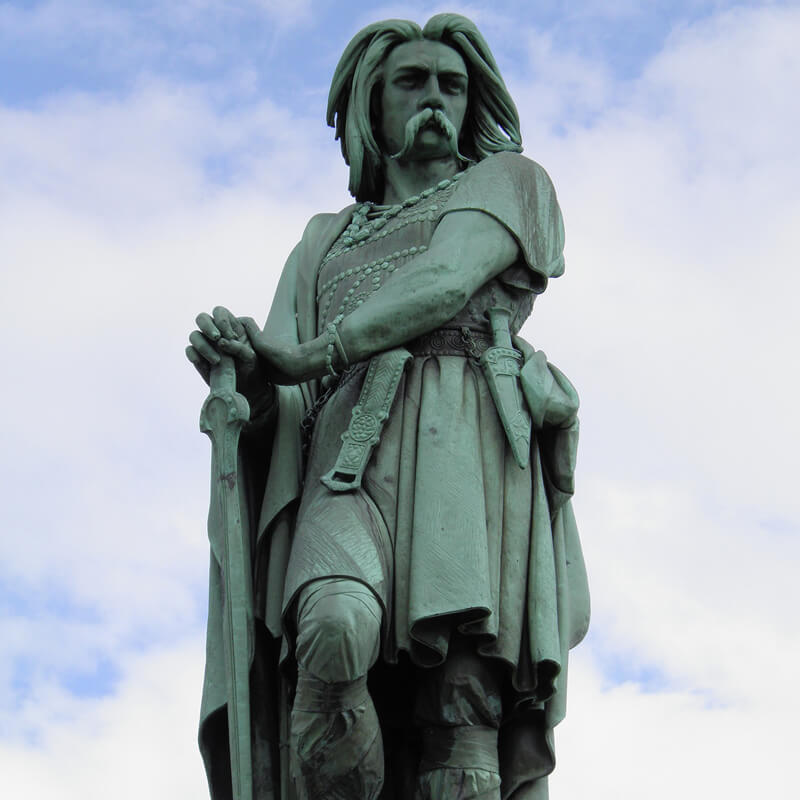
Stay up to Date
Follow me on my journey and get notified whenever a new post is published by following Kings & Castles on Facebook.
Follow MeExplore The Map
Discover the hundreds of castles, churches, monasteries, cathedrals and other historic locations that I've personally visited across England and Wales. Search by location, explore nearby sites and plan your next historical adventure.
Share: