Whitby Abbey
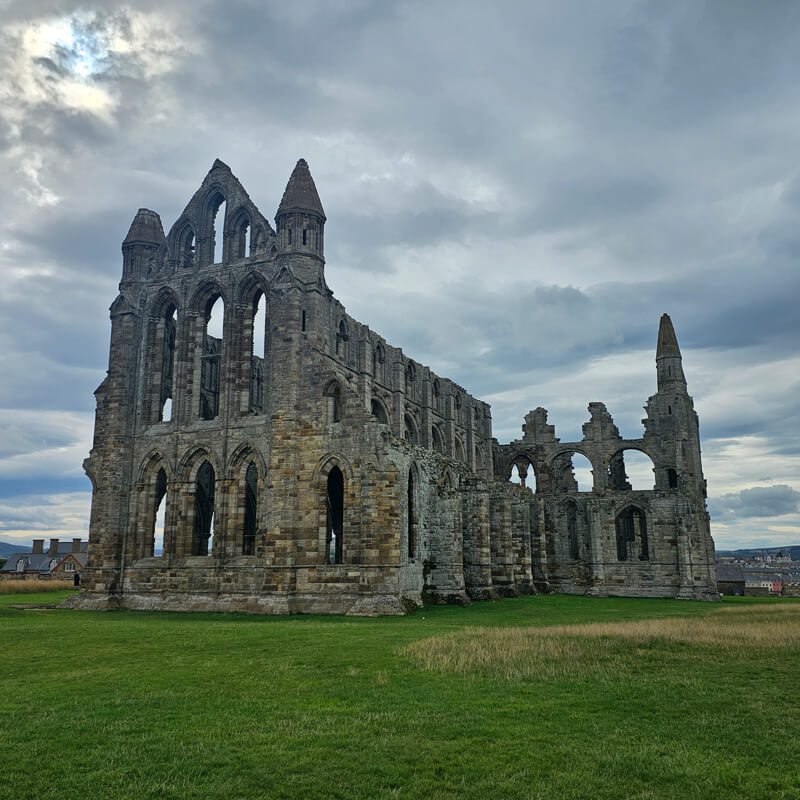
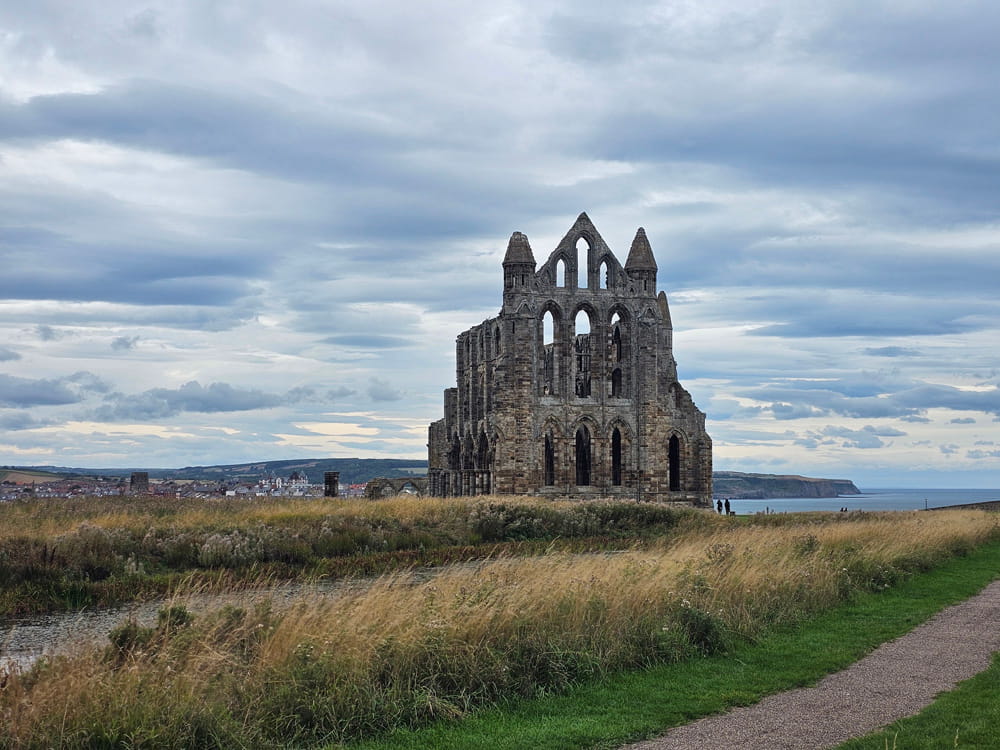
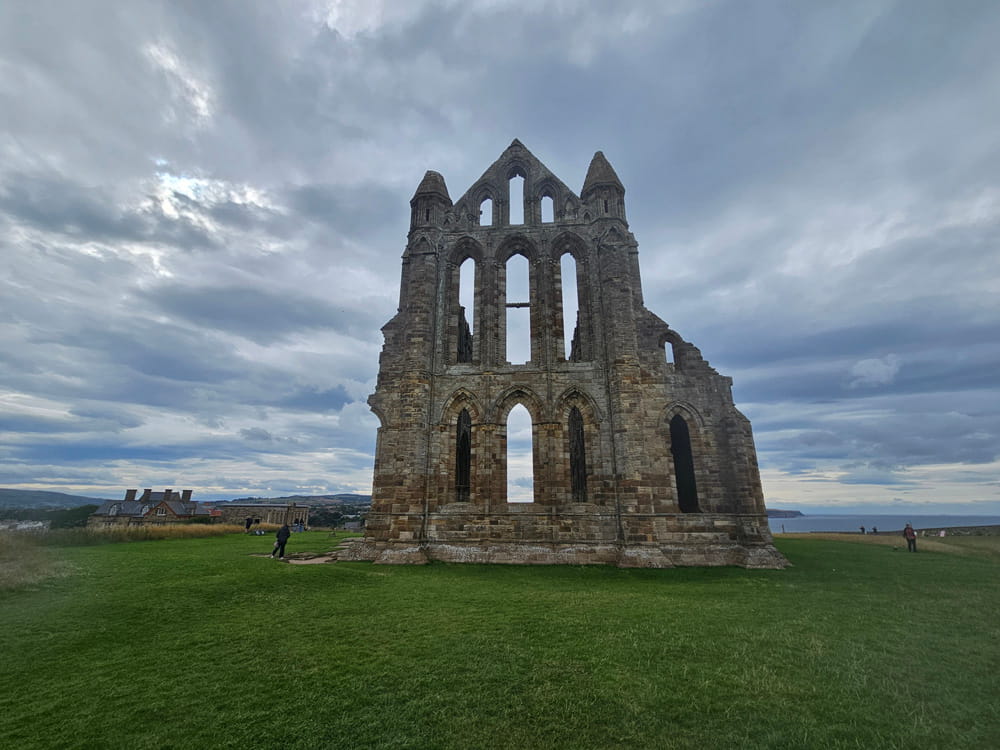
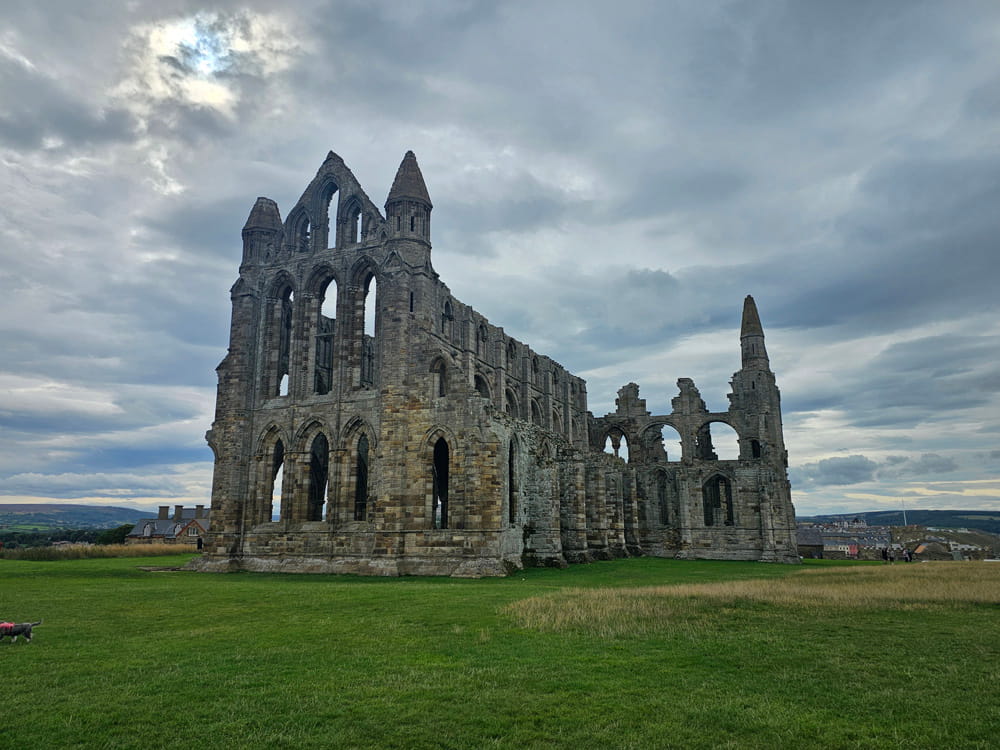
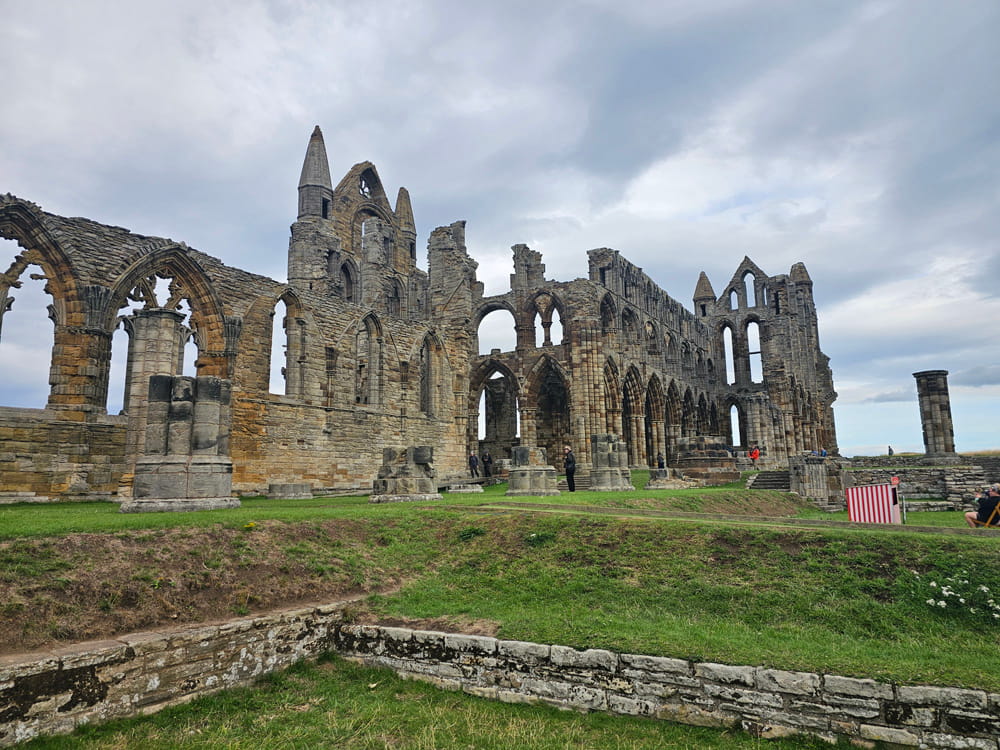
Perched high above the North Sea on the East Cliff of Whitby, Whitby Abbey is one of England’s most iconic historic ruins. Its soaring Gothic arches have inspired artists, writers, and visitors for centuries, but its story stretches back nearly 1,400 years to the early days of Anglo-Saxon Christianity.
Quick
Facts.
- Location: Whitby, North Yorkshire, England
- Founded: AD 657
- Founder: King Oswy of Northumbria
- Religious order: Benedictine
- Dissolved: 1539
- Condition: Substantial ruins
An Anglo-Saxon Beginning
The first monastery at Whitby was founded in 657 AD by King Oswiu of Northumbria, who established it as a double monastery for both monks and nuns. He appointed the remarkable Saint Hilda as its first abbess, and under her leadership Whitby became one of the greatest centres of learning in Anglo-Saxon England.
Hilda was renowned for her wisdom and leadership, attracting scholars, priests, and nobles from across the kingdom. The monastery educated five future bishops and became famous for encouraging religious scholarship. It was here that the cowherd Caedmon, often regarded as the first named English poet, was inspired to compose sacred verse in Old English.
The Synod of Whitby
Whitby’s most famous medieval moment came in 664 AD with the Synod of Whitby, one of the defining events in early English history. King Oswiu gathered church leaders to settle a growing dispute between Celtic Christian traditions, practised in Northumbria, and the Roman customs followed elsewhere in Western Europe.
The debate centred on issues such as the calculation of Easter and the style of monks’ tonsures. After hearing arguments from both sides, Oswiu ruled in favour of Roman practice, aligning the English Church more closely with Rome. The decision had lasting consequences, helping shape the future of Christianity in England.
Viking Destruction
Whitby’s golden age came to a violent end during the Viking raids of the late 9th century. Around 867 AD, Danish invaders destroyed the monastery as they swept through Northumbria. For roughly two centuries, the site lay abandoned, with only memories and scattered remains marking its former importance.
The Norman Abbey
After the Norman Conquest, monastic life returned to Whitby. Around 1078, the Benedictine monk Reinfrid, supported by William de Percy, founded a new monastery on the ancient site. This became the medieval abbey whose magnificent ruins dominate Whitby’s skyline today.
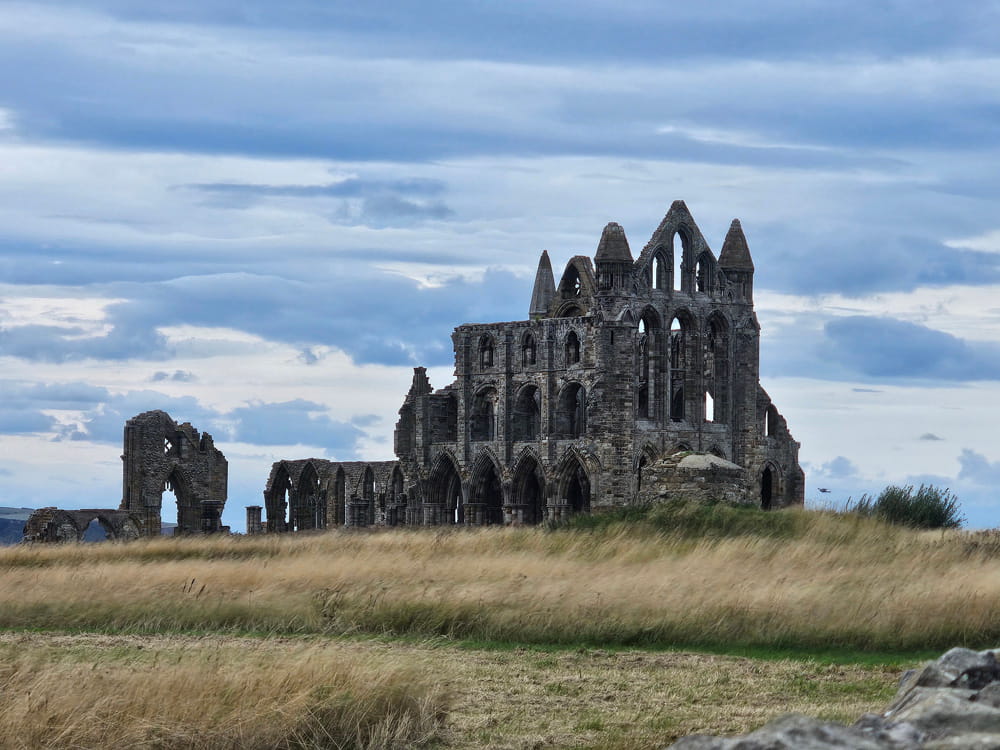
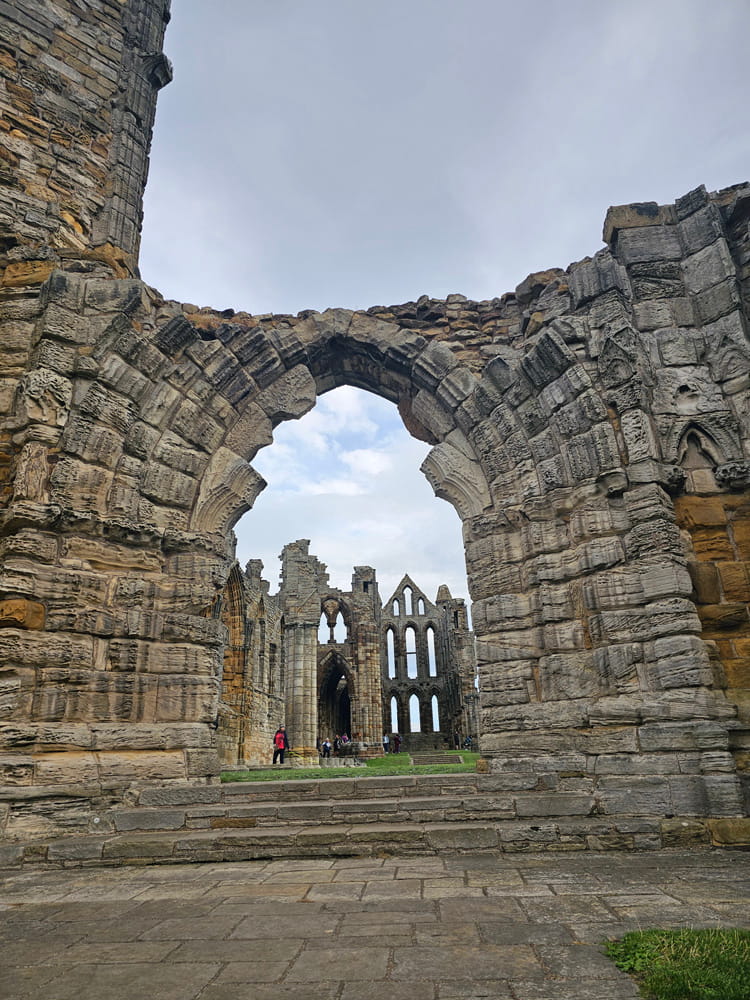
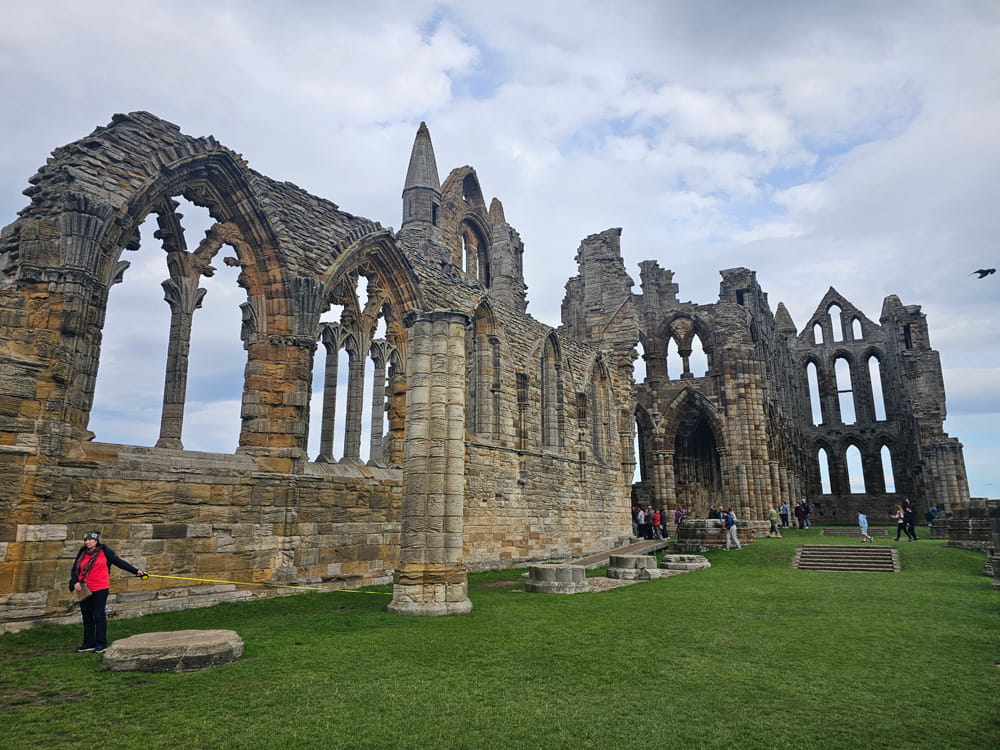
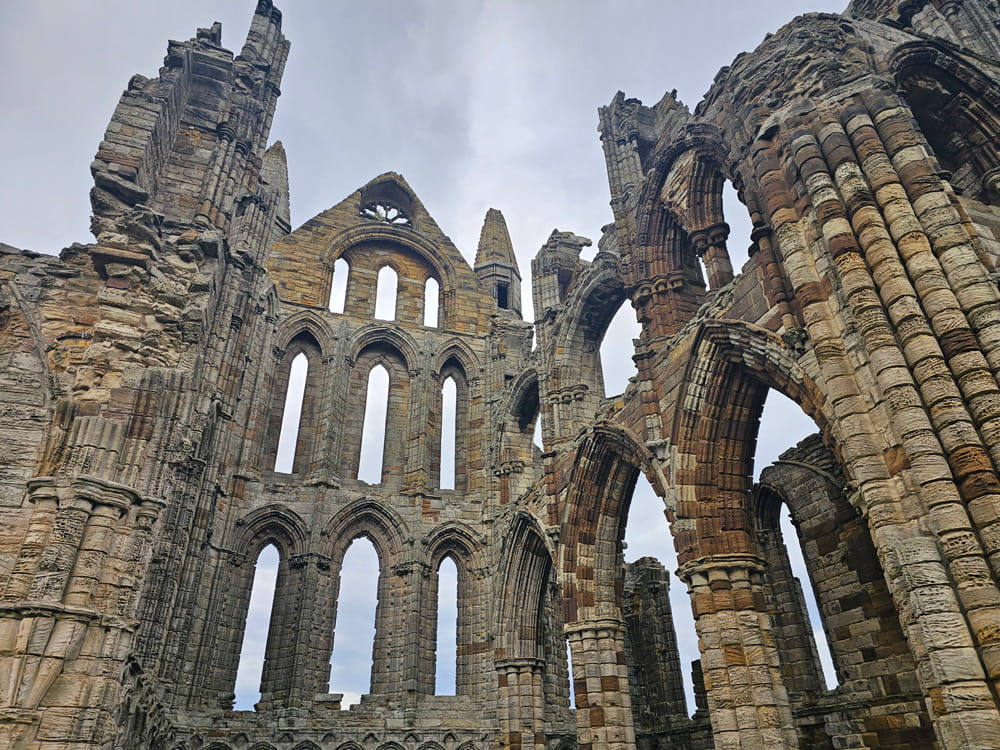
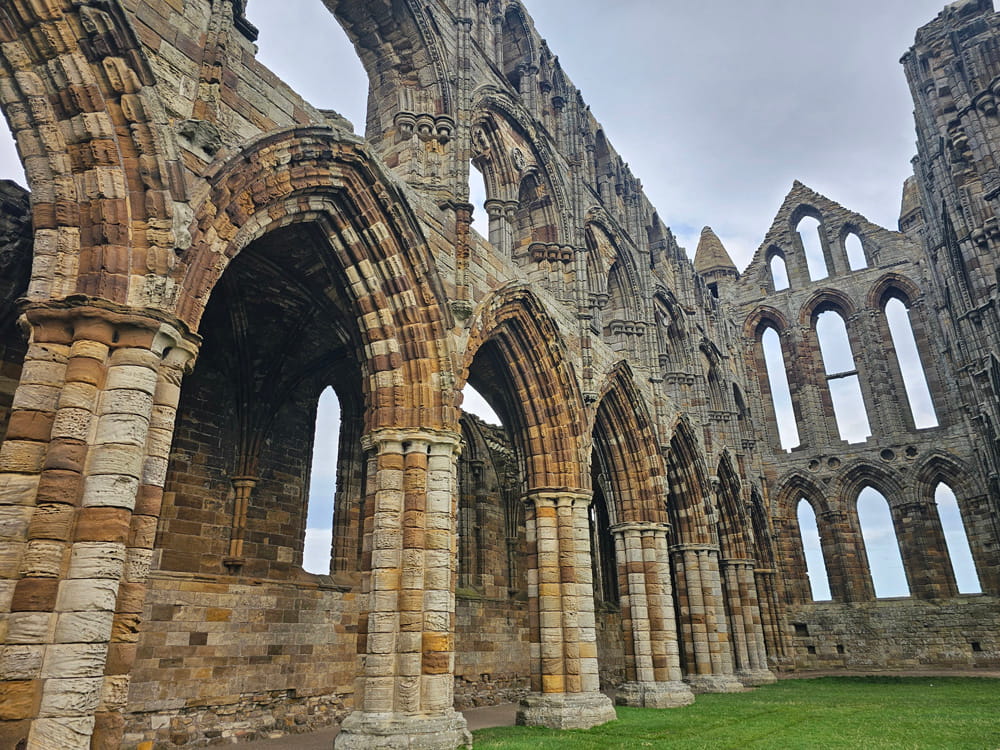
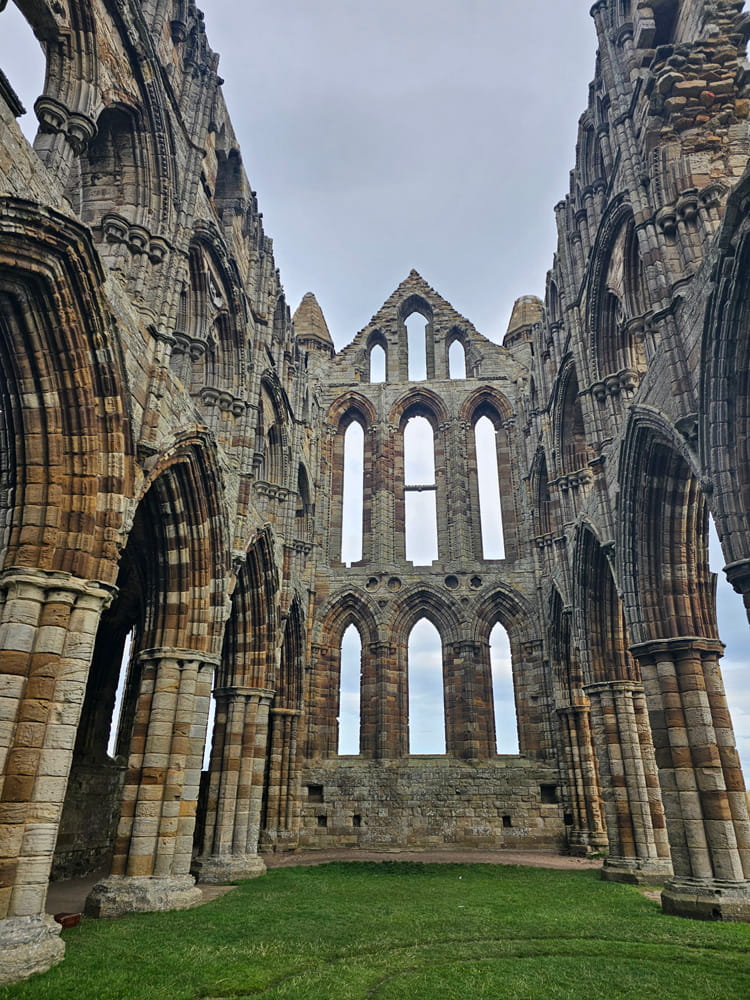
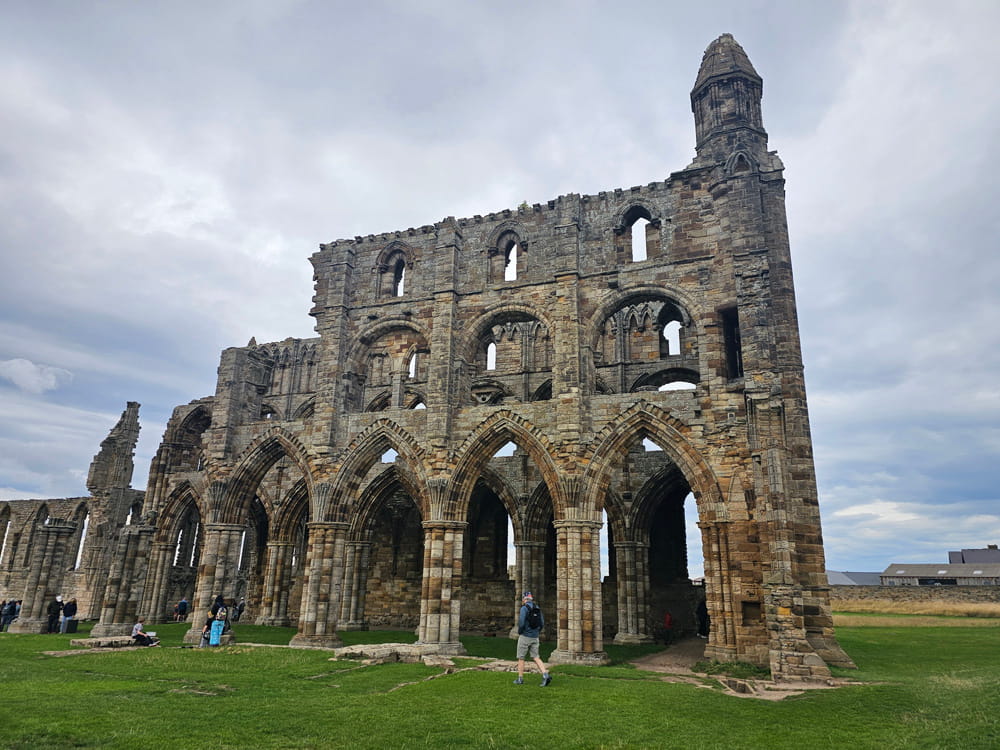
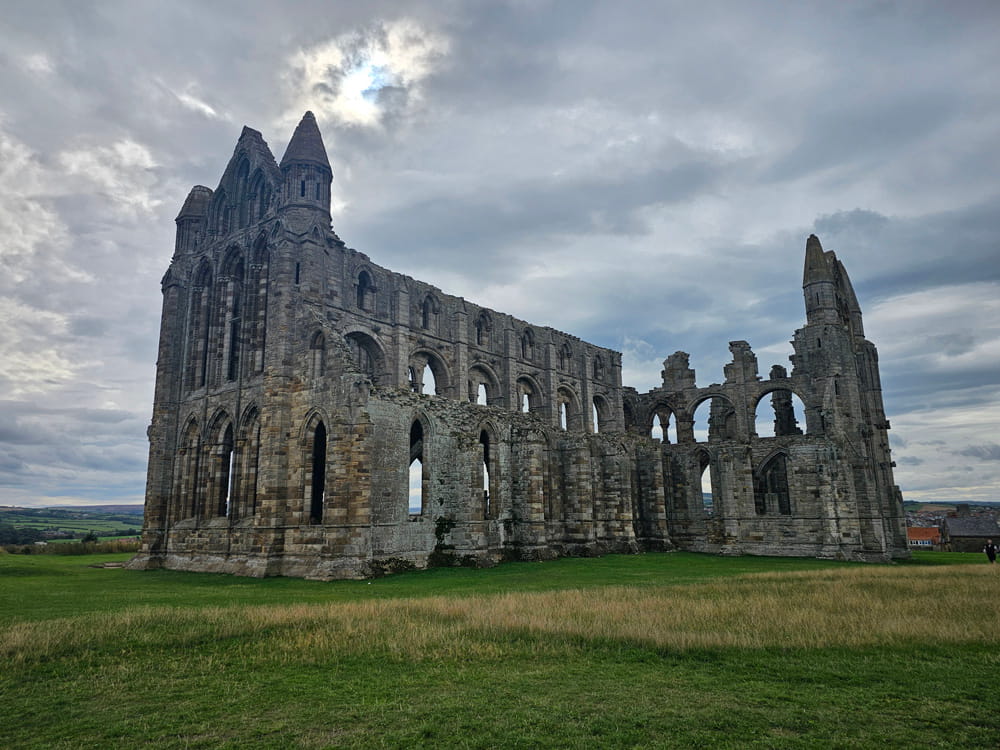
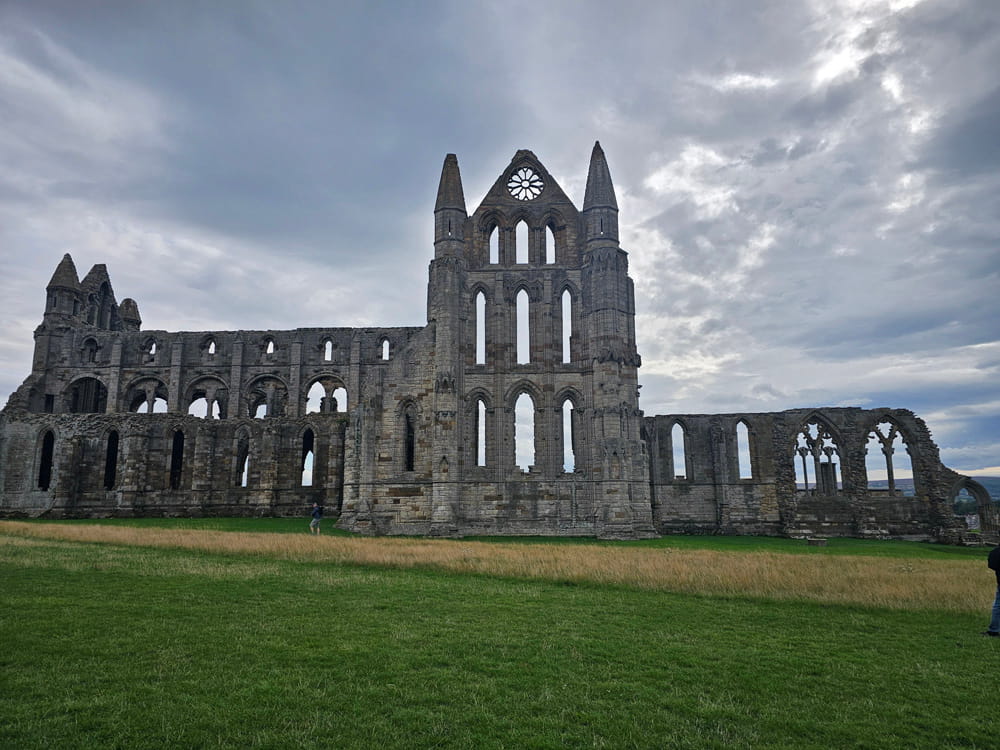
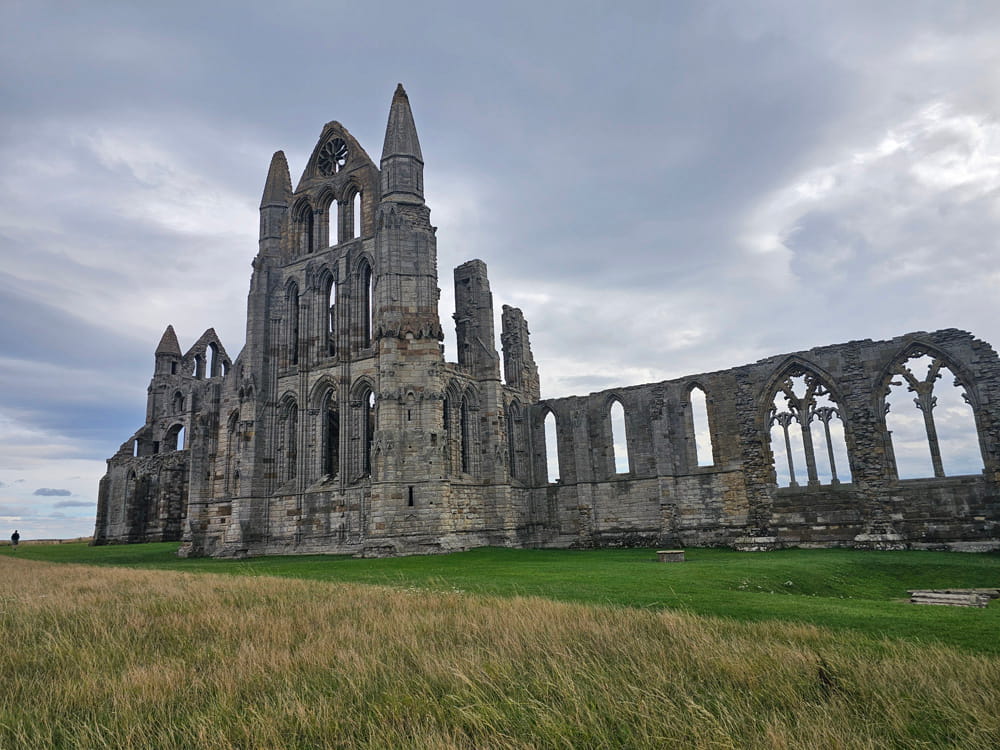
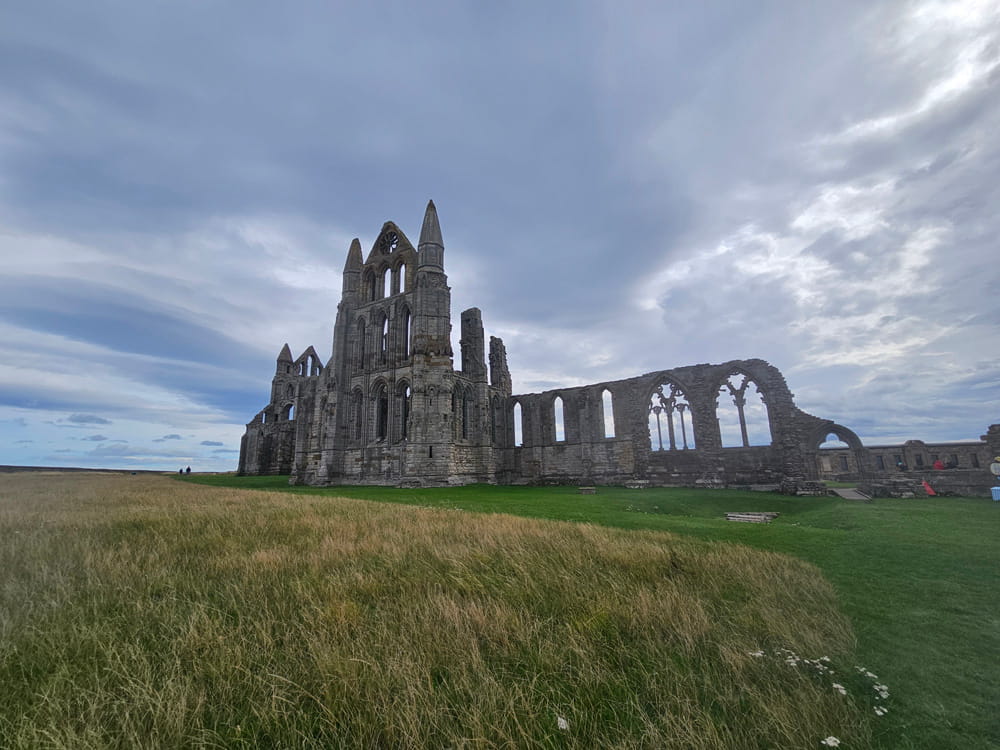
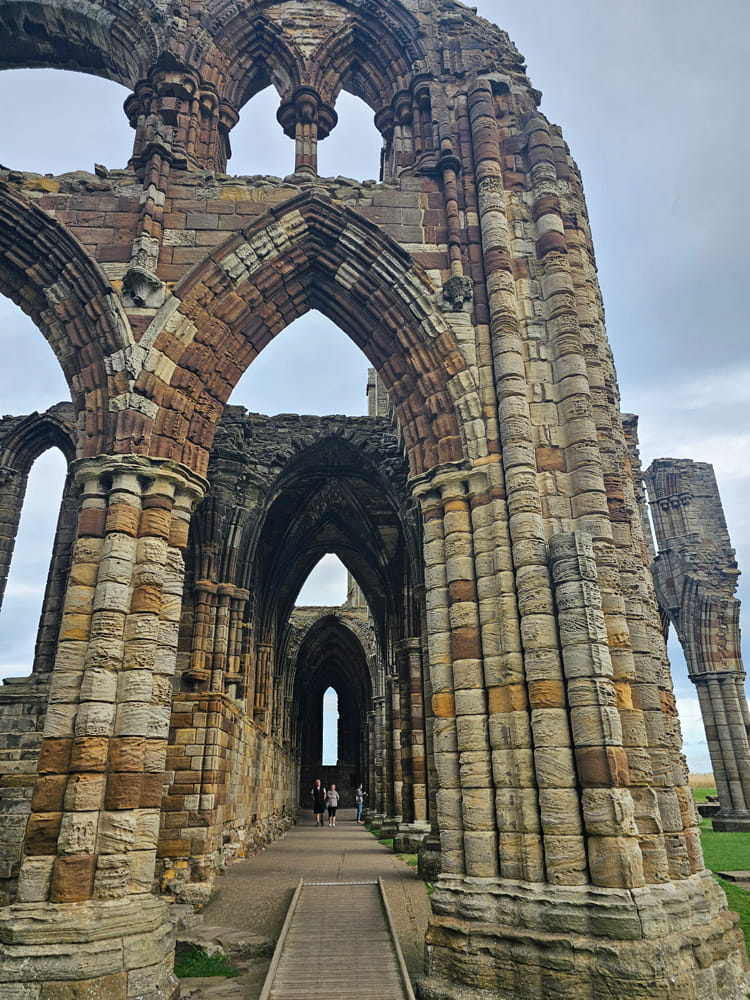
Construction continued for centuries, reflecting changing architectural styles. The earliest Norman buildings gradually gave way to larger Gothic structures, including the impressive church whose pointed arches and towering windows remain among the finest examples of medieval architecture in northern England.
The abbey became wealthy through land ownership, farming, fishing, and trade. Its position overlooking the harbour also made it an important landmark for sailors approaching the Yorkshire coast.
Life in the Medieval Abbey
Daily life followed the Benedictine Rule, balancing prayer, study, and manual labour. Monks gathered for worship throughout the day and night, copied manuscripts, managed farmland, and welcomed travellers and pilgrims.
The abbey maintained close links with the growing town of Whitby below, influencing local commerce and religious life. Pilgrims visited the shrine of Saint Hilda, whose reputation endured long after her death.
The Dissolution of the Monasteries
Whitby’s medieval chapter ended during the reign of Henry VIII. In 1539, the abbey was dissolved as part of the Dissolution of the Monasteries, which closed religious houses across England.
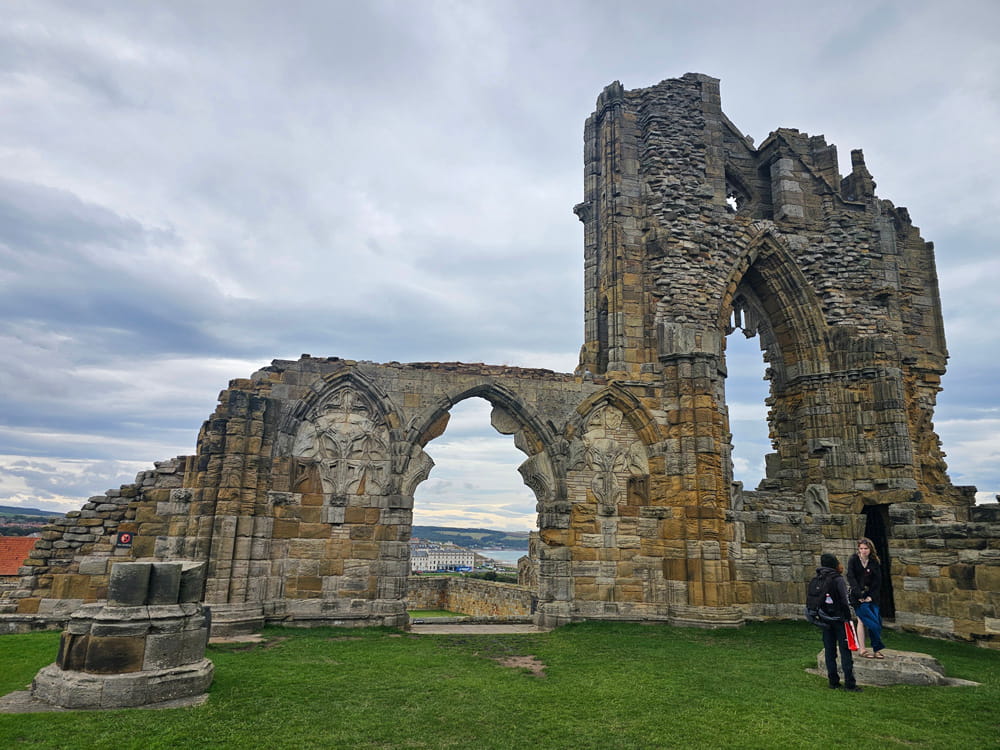
Its lands passed into private ownership, valuable materials were stripped away, and many buildings fell into ruin. Although abandoned as a monastery, the dramatic remains became an increasingly striking feature of the landscape.
Inspiration for Dracula
In the 18th and 19th centuries, Whitby Abbey became a favourite subject for Romantic painters and poets, who admired its haunting beauty against the sea and sky.
Its greatest cultural influence came through Bram Stoker, who visited Whitby in 1890 while researching his novel Dracula. In the story, Count Dracula arrives aboard the doomed ship Demeter and climbs the famous 199 Steps toward the abbey. Although the vampire never lives in the abbey itself, its silhouette became permanently associated with one of literature’s greatest Gothic tales.
Whitby Abbey Today
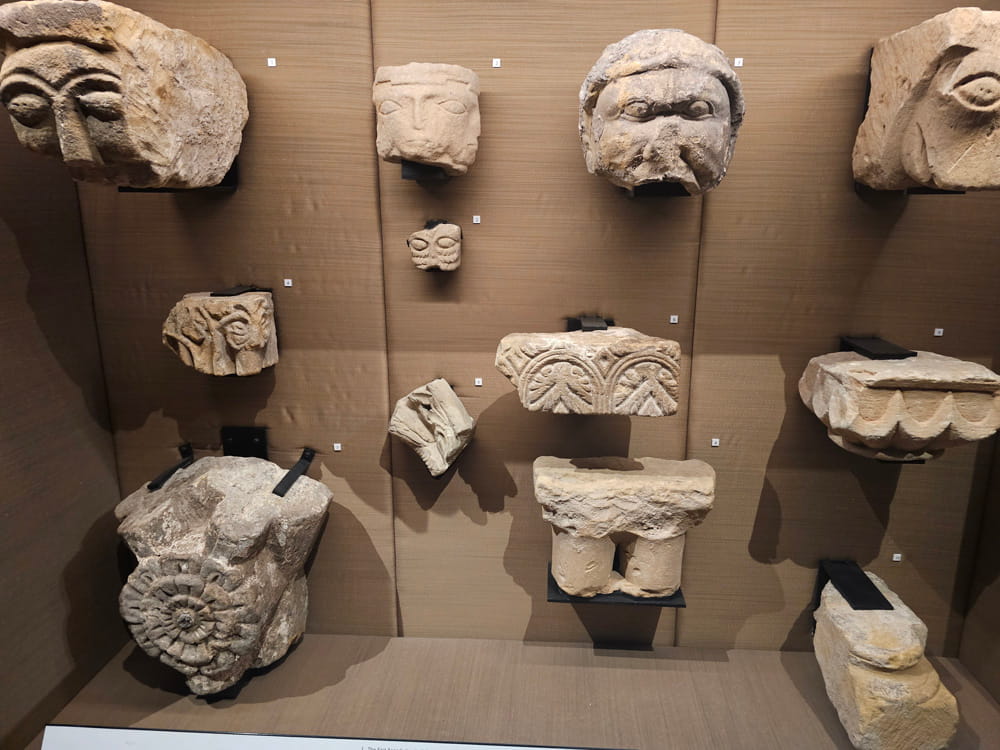
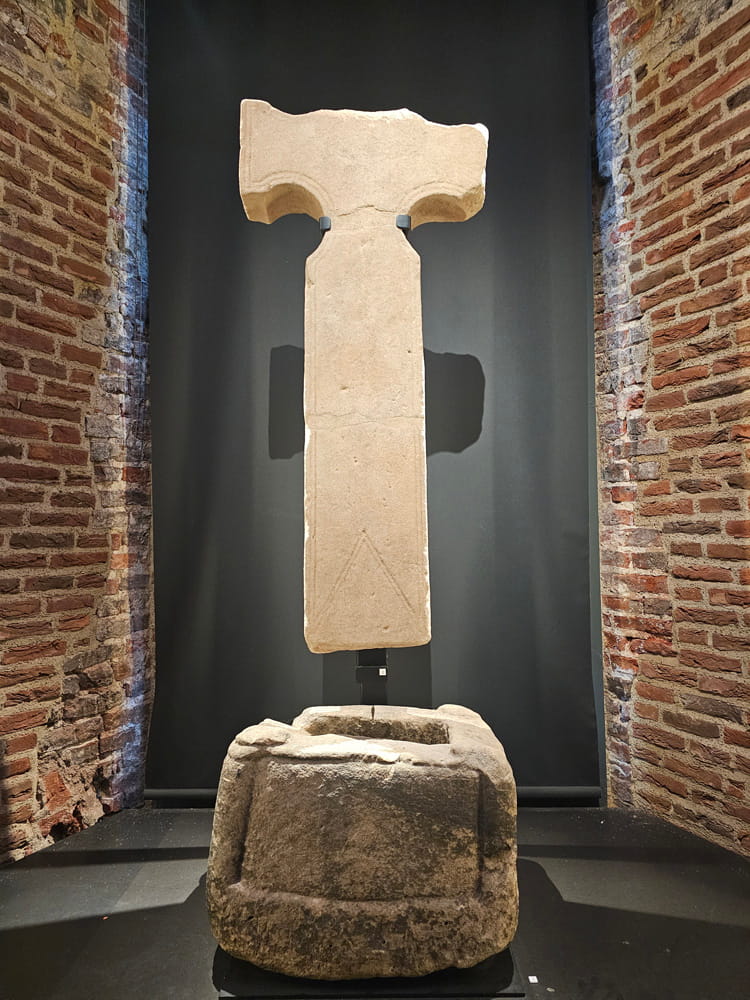
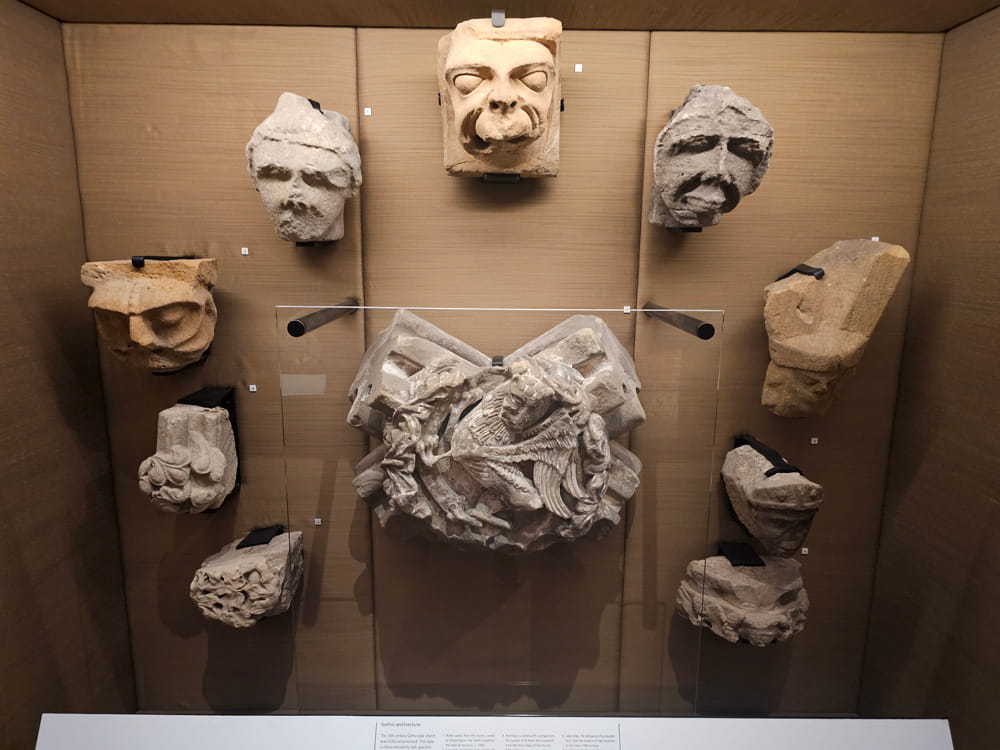
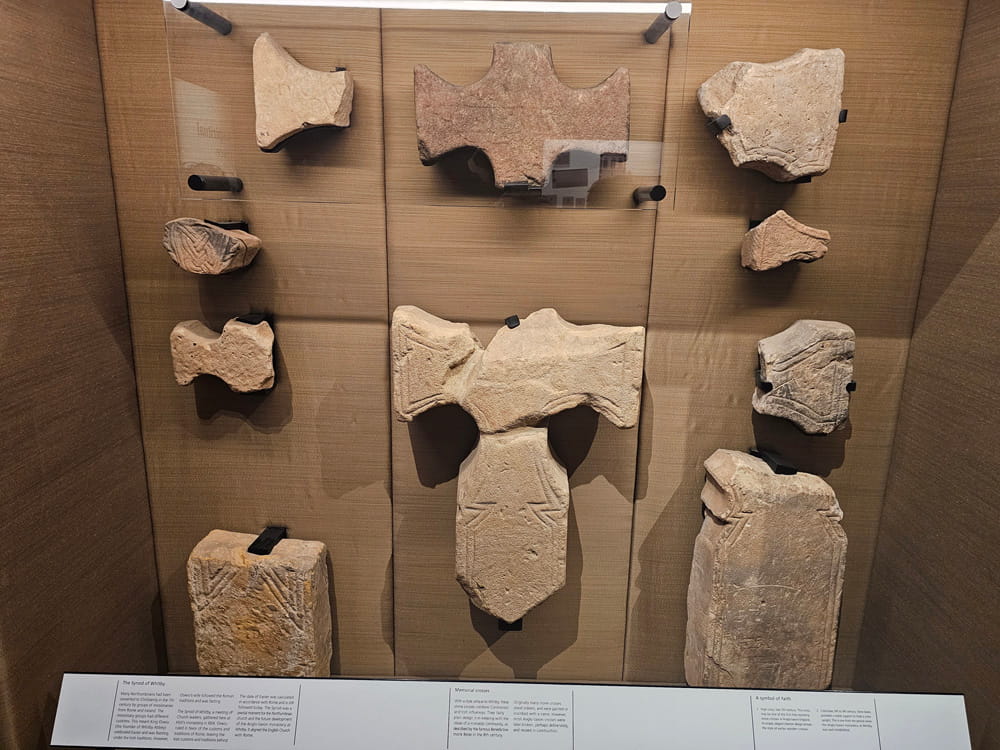
Today, Whitby Abbey is cared for by English Heritage and welcomes hundreds of thousands of visitors each year. The ruins preserve elements of both Norman and Gothic architecture, while the nearby museum displays artefacts from the original Anglo-Saxon monastery and the medieval abbey.
Standing above Whitby’s bustling harbour, the abbey remains a powerful symbol of Yorkshire’s history. From Saint Hilda’s influential monastery to Viking destruction, Norman rebuilding, Tudor dissolution, and Gothic legend, its story captures over a millennium of English history in one unforgettable cliff-top setting.
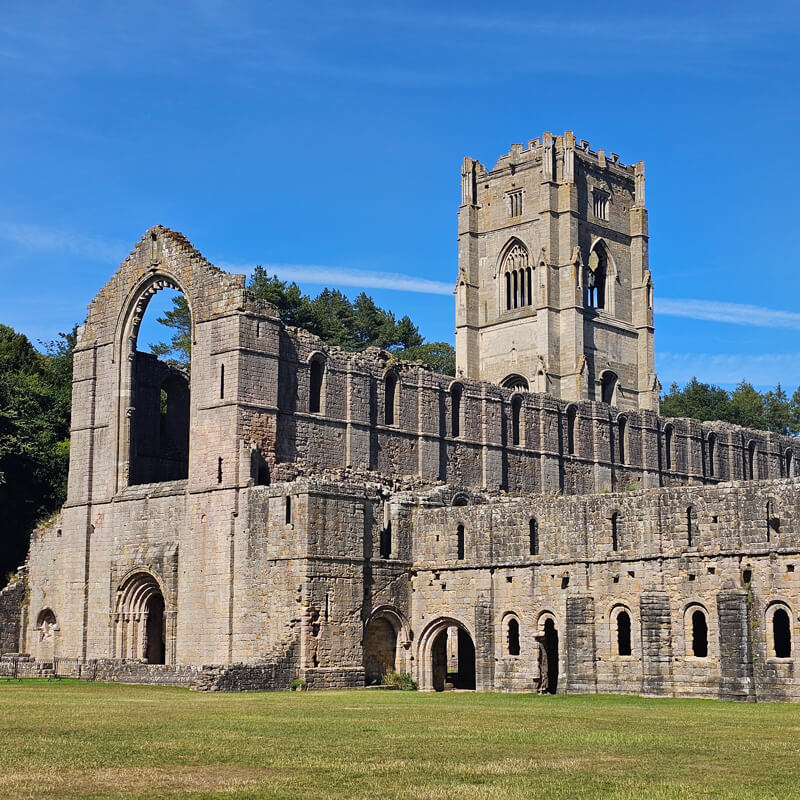
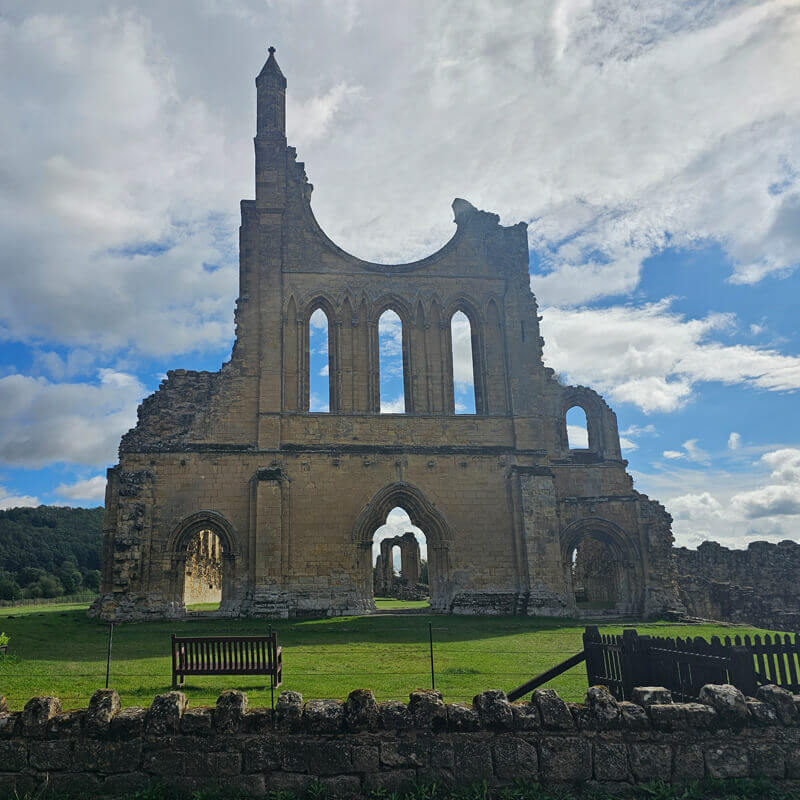
Photo Gallery.
Did you enjoy this post?
I hope you found this post useful. I put a great deal of time and effort in to building, maintaining and populating the website. If you like, you could say a small thank you by buying me a coffee. You don't have to, but it would be nice :)
Buy me a coffee
Stay up to Date
Follow me on my journey and get notified whenever a new post is published by following Kings & Castles on Facebook.
Follow MeExplore The Map
Discover the hundreds of castles, churches, monasteries, cathedrals and other historic locations that I've personally visited across England and Wales. Search by location, explore nearby sites and plan your next historical adventure.
Share: