Religious Orders in Medieval England
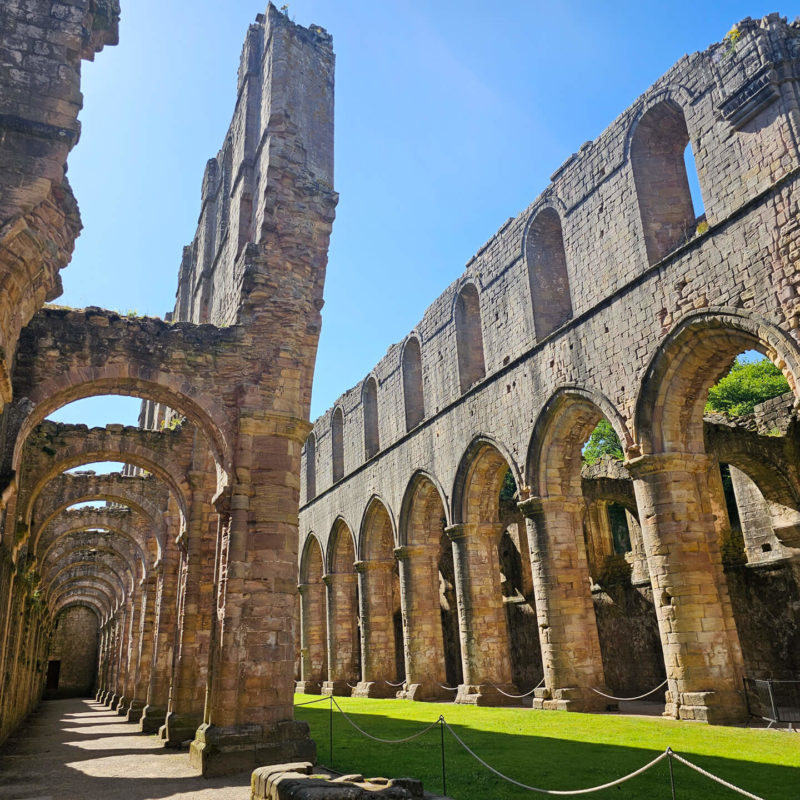
Until the end of the 11th century the monasteries in England mostly belonged to the Benedictine Order, but after the Norman conquest of 1066, William the Conqueror imposed a total reorganisation of the English Church, where new monasteries were built that followed new religious orders.
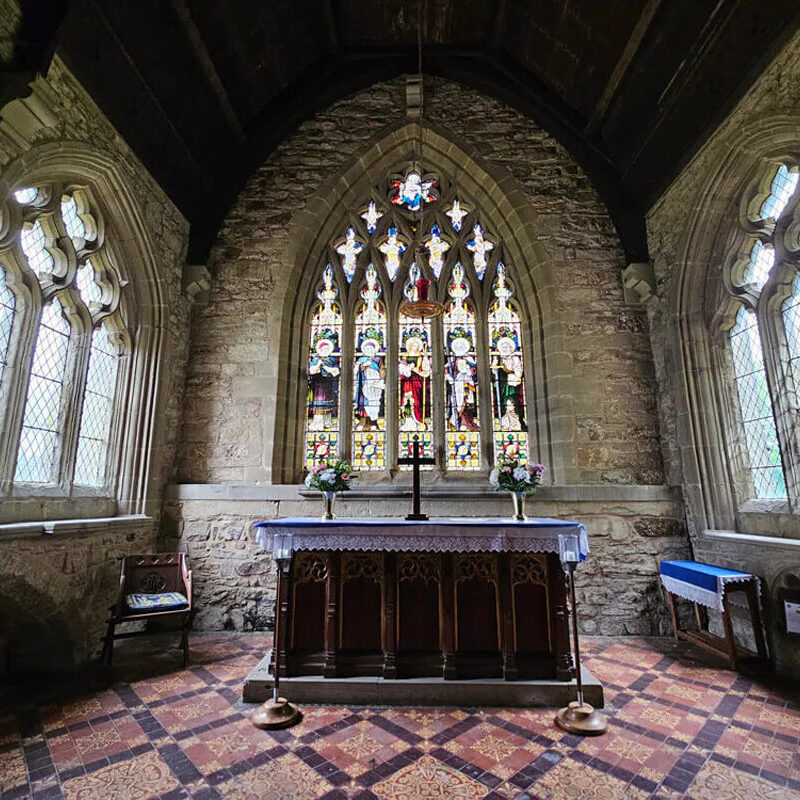
Overview
Religion in Medieval England covers the period between the end of Roman authority in the 5th century and the beginning of the Tudor dynasty in the late 15th century. The collapse of Roman authority brought about the end of formal Christian religion in the east of England as Germanic settlers (Anglo-Saxons) invaded and established paganism in the large sections of the island that they controlled. The movement towards Christianity began again in the late-6th and 7th centuries, when Pope Gregory I sent a team of missionaries who gradually converted most of the Anglo-Saxon kingdoms, while Scots-Irish monks were active in the north of England. The conversion process was largely complete by the end of the 7th century. The Viking invasions of the 8th and 9th centuries reintroduced paganism to North-East England, leading in turn to another wave of Christian conversions.
The process of conversions led to an explosion of local church and cathedral buildings, and monasteries formed the main basis for the church. Reforms followed under the kings of Wessex who promoted the Benedictine rule which was popular on the Continent. The 1066 Norman conquest brought a new set of Norman and French churchmen to power; some adopted and embraced aspects of the former Anglo-Saxon religious system, while others introduced practices from Normandy. The French Cluniac order became fashionable and the Augustinians spread quickly from the beginning of the 12th century, while later in the century the Cistercians reached England. The Dominican and Franciscan friars arrived in England during the 1220s, as well as the religious military orders that became popular across Europe from the 12th century.
The Benedictines
The Benedictines, or ‘Black Monks’, were founded by St Benedict in the year 529. St Benedict devised a set of rules for the monks of the Benedictine abbeys and monasteries to follow. The four vows of the Benedictine monks were obedience, chastity, poverty, and manual labour for seven hours each day. One of the most famous Benedictine monks, St Dunstan, Archbishop of Canterbury, was responsible for establishing a large number of Benedictine houses. They were the largest of the religious orders and were noted for their learning, books and artwork. Originally known as the Black Monks because they wore black cloaks, they became known as Benedictines later on when new orders began to appear to distinguish them from the others. Benedictine monasteries were common across both England and Normandy at the time of William the Conqueror, who founded the Benedictine Battle Abbey on the site of the Battle of Hastings in 1067. Over time the Benedictines became rich and involved in the world around them, with many straying from their strict way of life. Some monks believed the Rule of St Benedict wasn’t being followed and wanted to return to the simpler life that St Benedict had originally envisaged. So new orders evolved, named after the first house that was build. For example, the Cluniacs came from Cluny, and the Cistercians from Citeaux.
Examples of Benedictine monasteries include Glastonbury Abbey and Tewkesbury Abbey.
The Cluniacs
The Cluniac Order was founded by a Benedictine monk called Odo who believed that the strict rule of St Benedict wasn’t being followed. He founded the abbey of Cluny in the year 910 in an attempt to return the Benedictine rule to its original simplicity, along with several other new orders. The Cluniac Order first came to England in about 1078 at Lewes in the south, and most Cluniac establishments were small. The Cluniac monks dedicated much of their time to prayer, and left the agricultural work in the fields and gardens to paid servants.
An example and one of the largest Cluniac monasteries is Wenlock Priory.
The Carthusians
The Carthusian Order was founded in the year 1084 by Saint Bruno at Grande Chartreuse in France and were descended from the Benedictines. In England their houses were known as Charter-houses, with the main Carthusian monastery at Charterhouse in London. After the Dissolution of the Monasteries it became Charterhouse School. The Rule that these monks followed was possibly the most strict of all the orders. The Carthusians lived lives of isolation and silence, spending their days in their own individual cells, living in solitude where they did their own cooking and slept alone, with a small area of garden in which to grow food. They met their fellow monks only once a week, but even then conversation was very minimal. As the life of the Carthusian Order was so strict and they didn’t communicate with the outside world, the order struggled to win wide appeal and the number of abbeys remained very small.
The Cistercians
The Cistercians, or ‘White Monks’, were founded in France in 1098 by Benedictine monks who were unhappy that the rule of St Benedict wasn’t being followed. Its founders built a wooden monastery at Citeaux where they chose to live an extremely hard life, refusing the riches that the Benedictines accepted, choosing isolated rural locations far from civilisation to build their monasteries, and chose not to have servants. They weren’t as academic as the Benedictines, but instead focused on agriculture and hard manual labour. The Order was popular, but the success of the Cistercians increased with the arrival of St Bernard of Clairvaux in the early 12th century. The Cistercians came to England in the 12th century, and during the civil war known as ‘The Anarchy‘ (1135 – 1153) between King Stephen and the Empress Matilda, the Cistercians greatly increased their presence in Britain. The Cistercians became expert farmers, farming huge areas of land and raised large flocks of sheep. A result of their work ethic was that several monasteries became very rich, and owned large areas of land.
Examples of Cistercian monasteries include Dore Abbey and Buildwas Abbey.
The Augustinians
The Augustinians, also known as the Black Canons because they wore black robes, were not monks like the Benedictines or Cistercians, but were canons. Canons were priests who lived a monastic life in communities such as cathedrals or collegiate churches. They were known as Augustinians because they followed the rule of St Augustine. The Augustinian Order was formed in the 11th and 12th centuries, and its canons were not bound by strict rules like the monks from some of the other Orders. St Augustine was a bishop at Hippo, a city in Algeria in Roman North Africa. From the late-4th century to the early-5th century, he wrote many books on many subjects. One of which gave directions on how a monastic community should be run, which was the basis for the Augustinians rule. The Augustinians went out among the populace to preach and offer hospitality, and as a result, the Augustinians were quite popular, and their churches were therefore large and ornate.
Examples of Augustinian monasteries include Haughmond Abbey and Lilleshall Abbey.
The Premonstratensians
The Order of Canons Regular of Prémontré, also known as Premonstratensians, Norbertines or White Canons, was a religious order of canons that was founded by a priest called Norbert of Xanten in 1120 in the French town of Prémontré. Although the order was largely influenced by Cistercian ideals, the Premonstratensians followed the monastic rule of St Augustine. The Premonstratensians were canons rather than monks, and their life was one of great austerity, known for their austere, strict rule. The Premonstratensians first arrived in England in 1143 when they established their first house in Newhouse, Lincolnshire, where they became commonly known as white canons due to the colour of their robes.
The Trinitarians
The Order of the Trinitarians, formally known as the Order of the Most Holy Trinity and of the Captives, was founded in France in the late-12th century by St John de Matha after his vision of Christ with two Christian captives. They were a group of fighting monks formed to protect the religious sites in the Holy land, who’s original mission was to free enslaved Christians from captivity under the Moors in the Middle East, North Africa, and Spain during the Crusades. The Trinitarians devoted one-third of their possessions and revenues to the liberation of enslaved Christians; the other two-thirds were split between support for the monks and support for the poor. The Trinitarians came to England in the 13th century and set up a number of religious houses, including those at Knaresborough, Thelsford and Oxford.
Orders of Friars
Like monks, friars took the usual vows associated with religious orders, but unlike monks, friars travelled around the country and preached to those who would not normally be reached by other means. While they travelled they stayed at houses belonging to the order that were located in the towns they visited. The most significant orders of friars were the Dominicans and Franciscans, who arrived in England during the 1220s. The Dominican Order was founded by Saint Dominic in either 1215 or 1216 in France. He set up the order of friars to support Christian learning, with rules based on poverty and preaching. The Franciscans are an order of friars founded by the Italian saint Francis of Assisi in 1209, who preached the virtues of humility and austerity. They soon acquired many followers, renounced their material belongings and spread the teachings and spiritual disciplines of their founder and of his main associates and followers. The Franciscan friars were referred to as grey friars because of their grey robes, while the Dominican friars were known as black friars due to the dark colour of their robes.
An example of a Dominican friary is Blackfriars Friary in Hereford.
The Carmelites
A religious order for both men and women, the Carmelites were another order of Friars, but they originated in the Holy Land with roots that go back to the Crusades at the end of the 12th century. The Carmelite Order is one of the few monastic orders, if not the only one, to refer to a prophet of the Old Testament: Elijah and his disciple Elisha, who are considered by the Carmelites as the spiritual fathers of the order. The first Carmelites were Jewish and Christian hermits who settled on Mount Carmel in what is now Israel, who lived, prayed and taught in the caves supposedly used by Elijah and Elisha. A small group of Carmelites arrived in England in 1242 with knights returning from Crusade, settling in Aylesford in Kent and Hulne in Northumberland. The Carmelites wore white habits, and were therefore referred to as as white friars.
An example of a Carmelite friary is Whitefriars Friary in Coventry.
Military Orders
Originating in the Holy Land during the Crusades of the 11th to 13th centuries, these orders included the Knights Templar, Hospitallers, and Teutonic Order. There were many medieval military orders but these were the three most influential and impressive. They began as protectors of pilgrims but quickly evolved into formidable military forces with significant political, economic, and religious influence.
Knights Templar
The Poor Fellow-Soldiers of Christ and of the Temple of Solomon, more commonly known as the Knights Templar, was a group of warrior monks founded in Jerusalem around 1118 to defend Christian travellers on their way to Jerusalem. The Templars became one of the wealthiest and most popular military orders in Western Christianity. Known as the “bankers of Christendom”, they owned huge amounts of property throughout Europe and existed for nearly two centuries during the Middle Ages until the order was officially disbanded in the early-14th century. The order came to England under King Stephen and they were known for building round churches or incorporating rounded shapes into their architecture. In England, their legacy lives on in the many place names incorporating the word ‘temple’.
Knights Hospitaller
The Knights of St John, commonly known as the Knights Hospitaller, was founded in Jerusalem in the 12th century, providing hospitality and medical care to pilgrims in the Holy Land. The Hospitallers came to England under Henry I where they founded houses where novices could be trained in military arts and receive religious instruction. When the Templars were disbanded the Hospitallers received many of their churches and other property.
Teutonic Order
The Teutonic Order was founded by German merchants during the capture of Acre in Jerusalem in 1191 during the Third Crusade. The order was formed to aid Christians on their pilgrimages to the Holy Land and to establish hospitals to nurse the sick. The later withdrawal of a large number of German crusaders in 1197-98 caused the order to militarise to make it a military-religious order of knights, whose members have commonly been known as the Teutonic Knights. The Teutonic Order grew incredibly popular and became one of the most powerful orders of knights in the Holy Land.
Did you enjoy this post?
I hope you found this post useful. I put a great deal of time and effort in to building, maintaining and populating the website. If you like, you could say a small thank you by buying me a coffee. You don't have to, but it would be nice :)
Buy me a coffee
Stay up to Date
Follow me on my journey and get notified whenever a new post is published by following Kings & Castles on Facebook.
Follow MeExplore The Map
Discover the hundreds of castles, churches, monasteries, cathedrals and other historic locations that I've personally visited across England and Wales. Search by location, explore nearby sites and plan your next historical adventure.
Share: